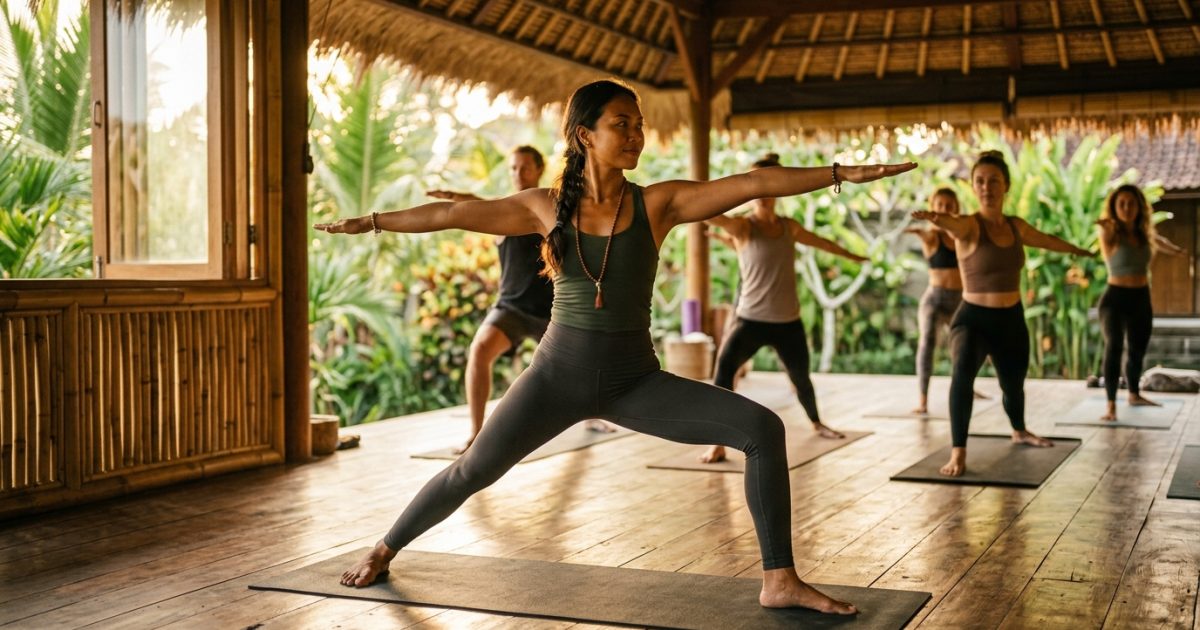
A yoga studio gives clients structured access to guided practice, from beginner-friendly classes to advanced teacher training programmes, in a setting designed for focus and physical safety. Choosing the wrong studio can mean wasted money, poor instruction, or worse, a preventable injury.
What to Look for in a Yoga Studio in Bali
Licensing and Credentials
Instructors should hold certifications from a recognised body such as Yoga Alliance (minimum 200-hour RYT qualification), and studios operating in Bali should hold a valid Indonesian business licence (SIUP or NIB). Ask to see these documents directly rather than accepting claims at face value.
Insurance and Public Liability
A reputable studio carries public liability insurance to cover clients in the event of injury on the premises. Without it, any medical costs resulting from an accident could fall entirely on you.
Experience and Specialisation
Different studios specialise in different styles, Ashtanga, Yin, Vinyasa, Kundalini, prenatal yoga, and some cater specifically to retreats or teacher training. Confirm that the studio has measurable experience delivering the specific style or programme you need, not just a general yoga offering.
Reviews and Word of Mouth
Look beyond the studio’s own website. Google reviews, TripAdvisor listings, and independent expat forums (such as Bali Expats on Facebook) give a clearer picture of day-to-day quality. Consistent praise for specific instructors is a stronger signal than generic five-star ratings.
Transparent Quoting
Class pricing, drop-in rates, package deals, and any registration or membership fees should be listed clearly before you commit. Avoid studios that require payment in full before disclosing the full schedule or instructor lineup.
Warranty and Guarantees
Some studios offer trial classes, satisfaction guarantees on packages, or partial refunds if a course is cancelled. Confirm the studio’s refund and cancellation policy in writing, particularly for multi-week programmes or retreats where you may be paying IDR 2,000,000 or more upfront.
Questions to Ask Before Hiring
- What are the qualifications and teaching experience of the instructors who will lead my classes?
- Is the studio registered as a legal business entity in Indonesia, and can I see the documentation?
- What is your cancellation and refund policy for class packages and retreats?
- Do you carry public liability insurance, and does it cover foreign nationals?
- What is the maximum class size, and how is it enforced during busy seasons (July, August, December)?
- Are classes conducted in English, and are instructors fluent enough to give clear anatomical cues and safety instructions?
- Do you offer a trial class or a single drop-in session before I commit to a package?
Red Flags to Watch Out For
- Red flag: The studio cannot provide instructor certification documents when asked. A legitimate Yoga Alliance-certified teacher will have a registration number you can verify at yogaalliance.org.
- Red flag: Pricing changes between your initial enquiry and check-in. This often indicates informal, unregistered operations with no fixed pricing structure.
- Red flag: Classes are significantly overcrowded, with more than 15 to 20 students per instructor in a standard session. Overcrowding reduces the quality of instruction and increases injury risk.
- Red flag: The studio has no visible reviews on independent platforms or responds aggressively to negative feedback online. A pattern of removed or ignored complaints is worth taking seriously.
- Red flag: No written agreement or receipt is provided for retreat or package payments. Always get a written confirmation with a breakdown of what is included before transferring funds.

Frequently Asked Questions
How long does it take to find a good Yoga Studio in Bali?
With some preparation, most people can identify a shortlist of suitable studios within two to three days. Reading reviews before you arrive, cross-referencing instructor credentials, and booking a drop-in class in your first week will give you enough information to make a confident choice. Bali has a large number of studios, particularly in Ubud, Seminyak, and Canggu, so options are not scarce.
What’s the average cost of a Yoga Studio in Bali?
A single drop-in class typically costs between IDR 100,000 and IDR 250,000 (roughly USD 6 to USD 15). Ten-class packages generally range from IDR 800,000 to IDR 2,000,000. Residential retreats with accommodation can run from IDR 3,500,000 to IDR 15,000,000 or more per person for a week, depending on the accommodation standard and programme depth.
Do I need to get multiple quotes for Yoga Studios in Bali?
For single classes or short-term drop-in use, comparing two or three studios on price and instructor credentials is sufficient. If you are committing to a retreat, teacher training course, or a long-stay package, getting at least three quotes and checking each studio’s refund policy gives you meaningful leverage and reduces the risk of paying for a programme that underdelivers.
The right yoga studio in Bali comes down to verified instructor credentials, clear pricing, a legal business registration, and a track record you can check independently. Pay attention to class sizes, refund policies, and whether the studio’s specialisation matches what you actually want to practise. To compare vetted options across Ubud, Canggu, and Seminyak, visit our curated list: Best Yoga Studios in Bali (2026).