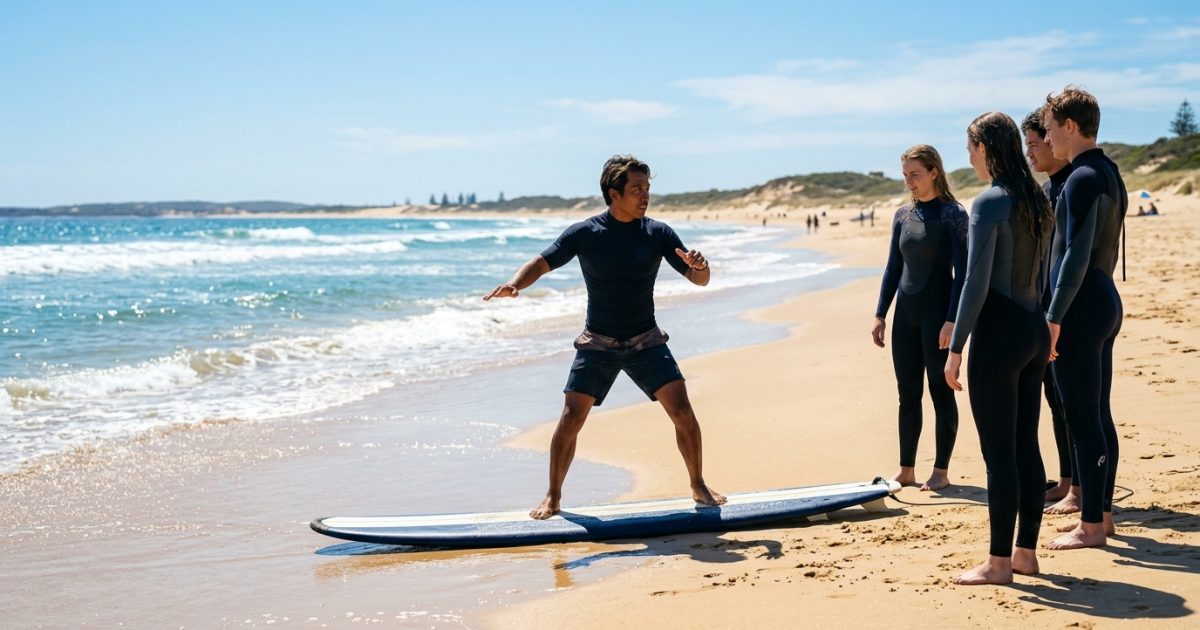
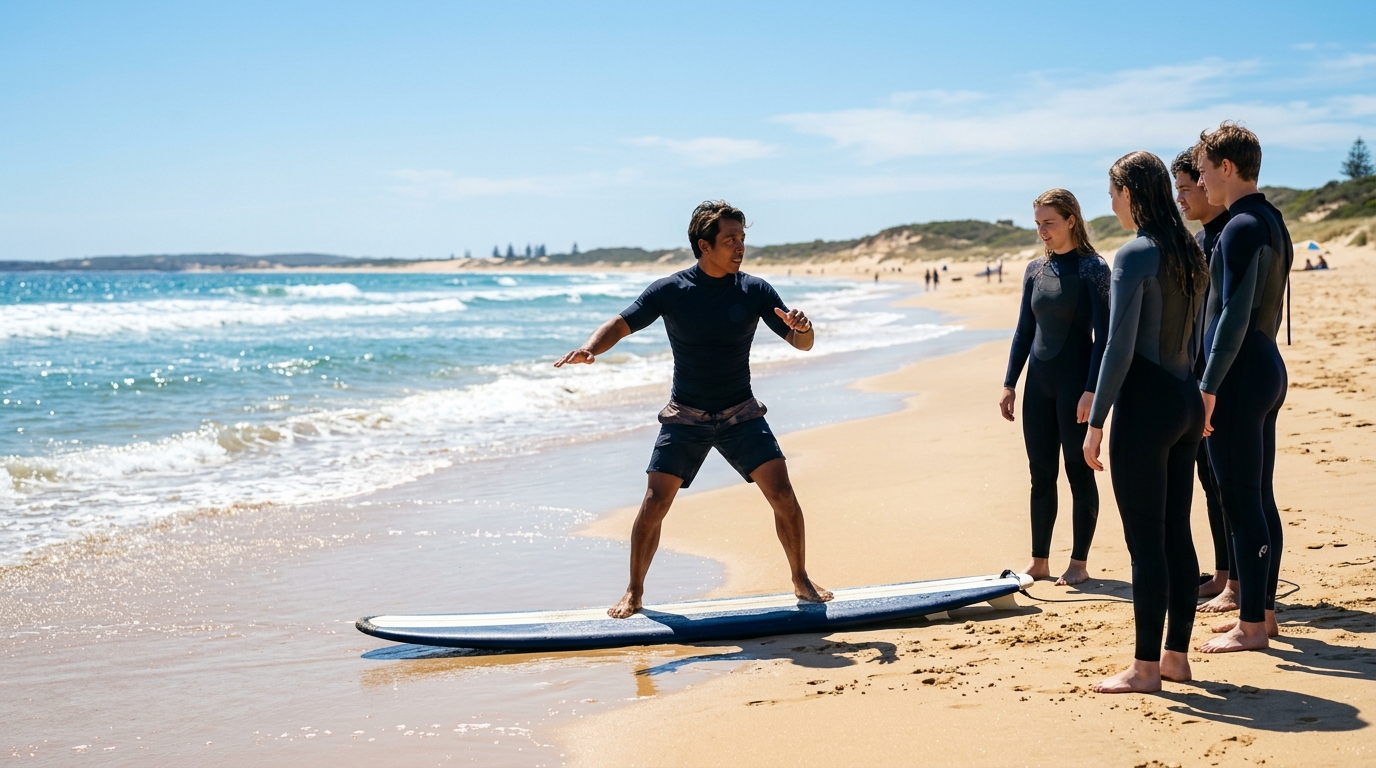
A surf school in Bali pairs students with qualified instructors who teach ocean safety, paddling technique, and wave reading across structured lessons suited to beginners through to intermediate surfers. Picking the wrong school can mean poor instruction, unsafe conditions, or wasted money on lessons that don’t progress your surfing.
What to Look for in a Surf School in Bali
Licensing and Credentials
Reputable surf schools in Bali operate with a valid Indonesian business licence (SIUP) and employ instructors certified through recognised bodies such as the International Surfing Association (ISA) or Surfing Australia. Ask to see these credentials before booking, as unregistered operations have no formal accountability if something goes wrong.
Insurance and Public Liability
Any school taking paying students into the water should carry public liability insurance that covers injuries during lessons. Bali’s surf breaks range from gentle beach breaks to powerful reef breaks, so confirm that the school’s insurance policy applies specifically to surf instruction activities and covers guests at the lesson location.
Experience and Specialisation
Look for schools that have been operating for at least three years at a consistent location, such as Kuta, Seminyak, or Canggu, and whose instructors have verifiable experience teaching at those specific breaks. Some schools specialise in kids’ lessons, women-only programmes, or intermediate progression clinics, so match the school’s focus to your actual goals.
Reviews and Word of Mouth
Check Google reviews, TripAdvisor, and Bali-specific travel forums for consistent feedback about instructor quality, group sizes, and safety standards. A pattern of complaints about overcrowded lessons or inattentive instructors is more telling than a single negative review.
Transparent Quoting
A trustworthy school provides a written breakdown of what’s included in the lesson price, covering board hire, rash vest, video analysis (if offered), and any transport to the beach. Schools that quote verbally and then add costs at checkout are worth avoiding.
Warranty and Guarantees
Some established schools offer a free repeat lesson if you don’t stand up on your first attempt, or a money-back policy if the session is cancelled due to school-side issues. This kind of commitment signals confidence in their instruction and reasonable customer service standards.
Questions to Ask Before Hiring
- Are your instructors ISA-certified or hold an equivalent recognised qualification?
- What is the maximum student-to-instructor ratio during group lessons?
- Which beach or break will lessons take place at, and is it appropriate for my current skill level?
- Does your school carry public liability insurance that covers students during lessons in the water?
- What equipment is provided, and how old or worn is the board stock?
- Do you offer video review or feedback after the session, and is that included in the quoted price?
- What is your cancellation and rescheduling policy if conditions are unsafe or the lesson is cancelled by the school?
Red Flags to Watch Out For
- Red flag: Instructors cannot produce any formal certification when asked directly, and the school deflects the question rather than answering it.
- Red flag: Group lessons are advertised with no stated cap on numbers, or you arrive to find more than six students per instructor in the water.
- Red flag: The school uses visibly damaged boards with deep pressure dings, cracked fins, or missing leash plugs, indicating poor maintenance and potential safety risk.
- Red flag: Pricing is only given verbally, with no written confirmation of what is and isn’t included before you pay.
- Red flag: The school has no fixed address, no verifiable online presence, and operates purely through commission-based hotel concierge referrals with no independent reviews.
Frequently Asked Questions
How long does it take to find a good Surf School in Bali?
With a bit of research, most visitors can identify two or three solid options within an hour using Google, TripAdvisor, and travel forums. Spending 30 minutes cross-checking reviews and sending a quick message to shortlisted schools is usually enough to separate the reliable operators from the rest.
What’s the average cost of a Surf School in Bali?
Group lessons typically run between IDR 250,000 and IDR 450,000 (roughly USD 15 to USD 28) per person for a two-hour session, including board and rash vest hire. Private one-on-one lessons range from IDR 500,000 to IDR 900,000 (approximately USD 30 to USD 55) per hour depending on instructor experience and location.
Do I need to get multiple quotes for Surf Schools in Bali?
Getting at least two or three quotes is worth doing, less because prices vary dramatically and more because it lets you compare what’s actually included. A school charging IDR 350,000 with video feedback and small group sizes often represents better value than a cheaper option with eight students per instructor.
Choosing the right surf school comes down to verified instructor credentials, sensible group sizes, clear pricing, and a track record you can check independently before handing over any money. Schools that are upfront about their certifications, insurance, and lesson structure are consistently the safest and most effective choice for anyone learning to surf in Bali. To compare your options, see the Best Surf Schools in Bali (2026).