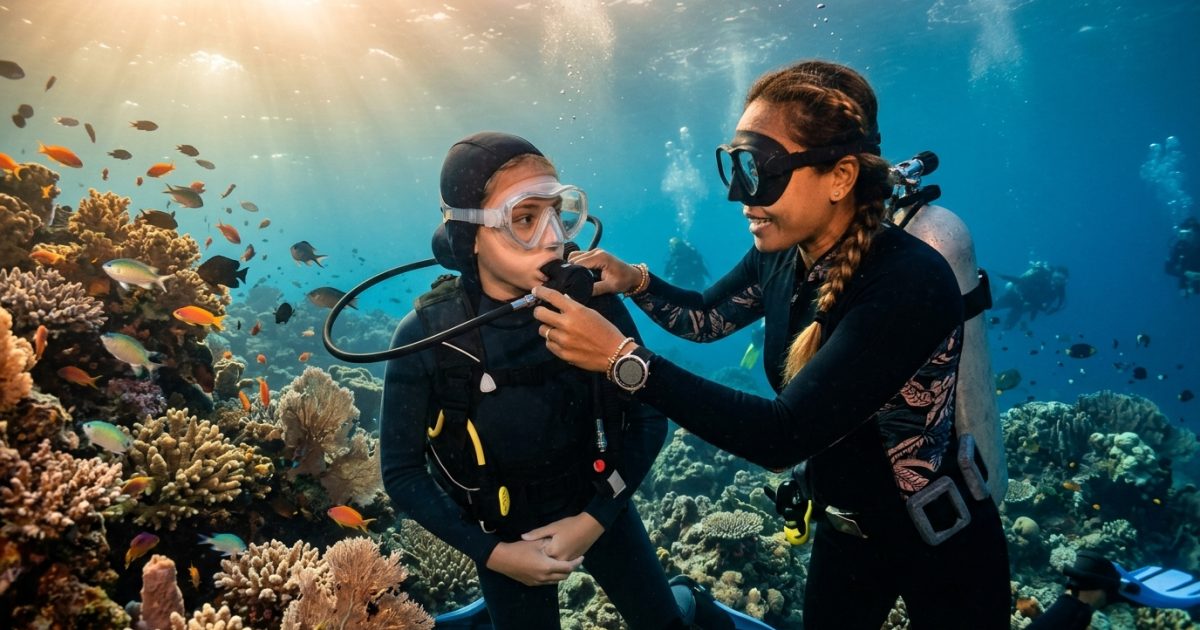
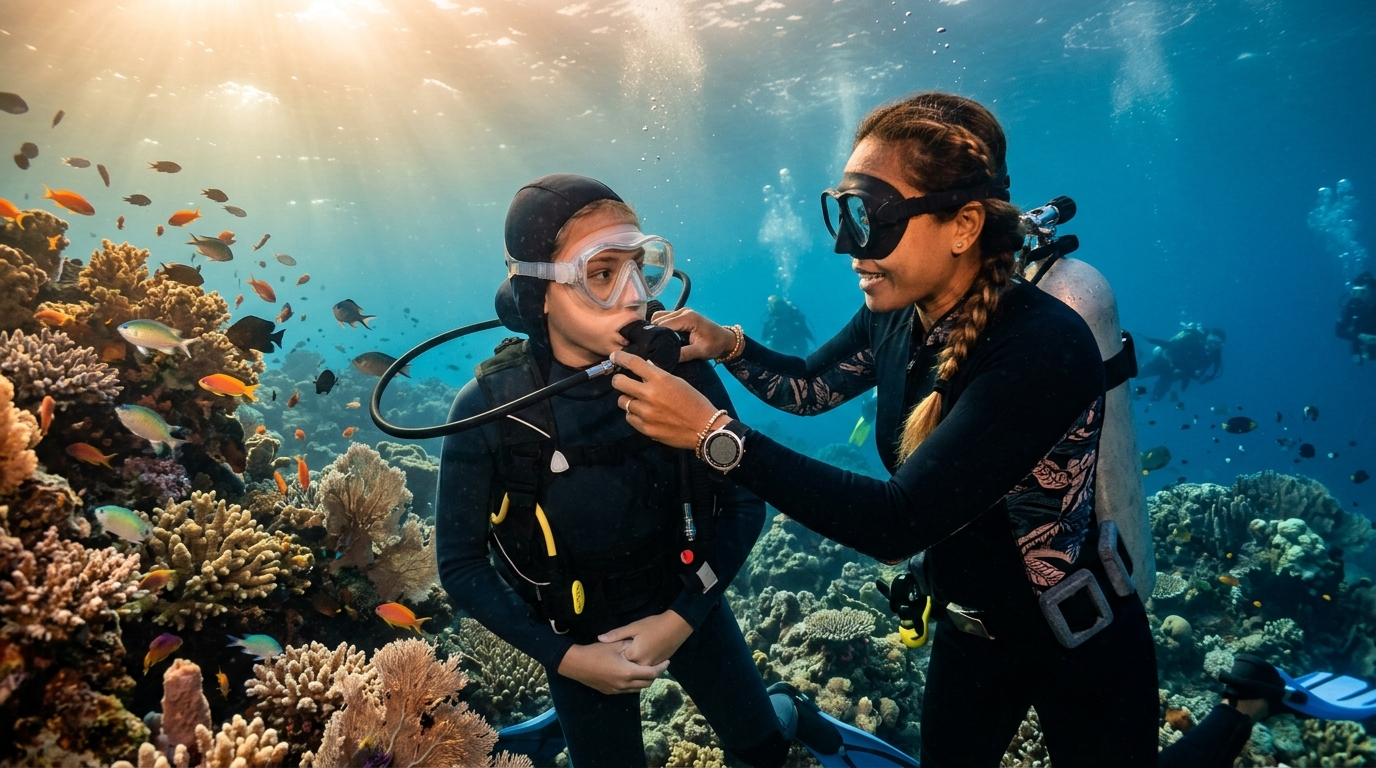
A dive school in Bali teaches you to scuba dive safely, guides certified divers to the best local sites, and provides all the equipment, instruction, and supervision needed for an underwater experience. Choosing the wrong school can mean poor safety standards, unqualified instructors, or a rushed course that leaves you underprepared in open water.
What to Look for in a Dive School in Bali

Licensing and Credentials
Any reputable dive school in Bali should be affiliated with a recognised international training agency such as PADI, SSI, or NAUI. Check that individual instructors hold current certifications and that the school is registered as an authorised dive centre with their accrediting body, which you can verify directly on the agency’s website.
Insurance and Public Liability
Diving carries real physical risk, so confirm that the school holds public liability insurance and that students are covered during training dives. Ask specifically whether the school’s insurance includes DAN (Divers Alert Network) emergency evacuation coverage, given that Bali’s nearest hyperbaric chamber is in Sanur and serious incidents require rapid response.
Experience and Specialisation
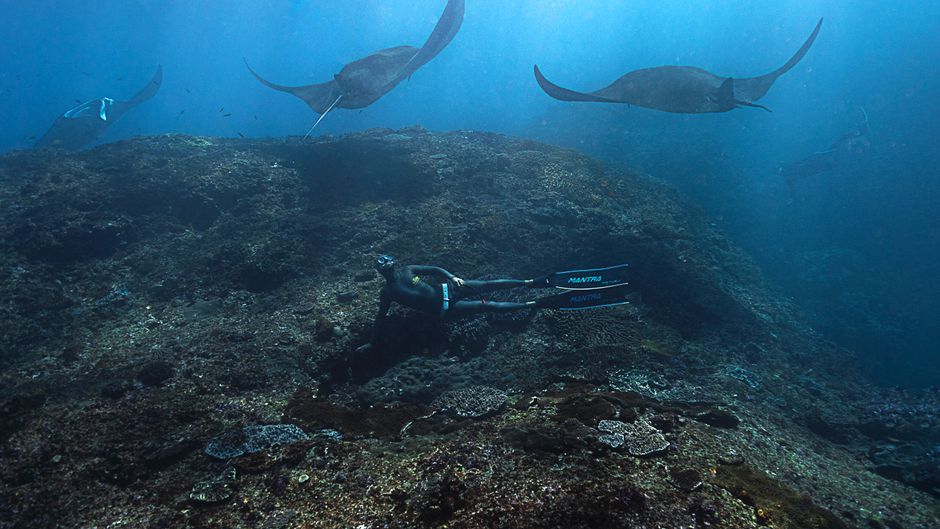
Bali’s dive sites range from the gentle slopes of Amed to the strong currents of Nusa Penida, so look for schools whose instructors have logged significant hours at the specific sites you want to visit. A school that specialises in manta ray encounters at Crystal Bay, for example, should have instructors who dive that site regularly and understand its seasonal conditions.
Reviews and Word of Mouth
Google Reviews, TripAdvisor, and Scubaboard are all worth checking, paying attention to comments about instructor patience, equipment condition, and group size. Ask your accommodation or other travellers for personal recommendations, as word of mouth from people who have recently dived with a school carries more weight than marketing materials.
Transparent Quoting
A trustworthy school will give you a written breakdown of what is included in the price, covering equipment hire, certification fees, course materials, and boat or entry fees. Be cautious of headline prices that exclude certification registration costs, as these can add IDR 500,000 to IDR 1,500,000 to the final bill without warning.
Warranty and Guarantees
Reputable schools will offer a clear policy on what happens if you do not pass a skills assessment during your course, including whether additional pool sessions or open water dives are provided at no extra charge. Get any such guarantees in writing before you pay a deposit.
Questions to Ask Before Hiring
- Are your instructors currently certified with PADI, SSI, or another internationally recognised agency, and can I see their instructor numbers?
- What is the maximum student-to-instructor ratio for open water dives, both in the pool and at sea?
- Is public liability insurance included, and does coverage extend to emergency evacuation and hyperbaric treatment?
- What dive sites do you use for open water certification dives, and what are the typical conditions at those sites?
- Does the quoted price include all certification registration fees, equipment hire, and marine park entry fees?
- How old and well-maintained is your equipment, and when were the regulators last serviced?
- What is your policy if I need extra time or additional dives to complete a skills requirement?
Red Flags to Watch Out For

- Red flag: The school cannot produce a verifiable instructor certification number linked to an active PADI, SSI, or NAUI profile.
- Red flag: Group sizes for open water training dives exceed four students per instructor, which is above the standard maximum set by most certifying agencies.
- Red flag: Equipment looks visibly worn, tanks show corrosion around the valve, or regulators have not been serviced within the past 12 months.
- Red flag: The school is unwilling to provide a written cost breakdown and asks for full payment in cash with no receipt.
- Red flag: Online reviews consistently mention instructors rushing through skills assessments or skipping required theory components to move students through faster.
Frequently Asked Questions
How long does it take to find a good Dive School in Bali?
With focused research, most people can shortlist two or three credible schools within a day or two of reading reviews and checking certifications online. Visiting the school in person before committing adds another half day but is worth doing to inspect equipment and meet your instructor.
What’s the average cost of a Dive School in Bali?
A PADI Open Water certification course typically costs between IDR 4,500,000 and IDR 7,500,000 (roughly USD 280 to USD 470) depending on the school’s location and inclusions. Fun dives for already-certified divers generally run IDR 500,000 to IDR 900,000 per dive, with discounts available for multi-dive packages.
Do I need to get multiple quotes for Dive Schools in Bali?
Comparing at least two or three schools is sensible, as pricing and inclusions vary considerably even among schools offering the same certification course. Price alone should not be the deciding factor, since cheaper quotes often exclude certification fees or use older equipment.
Choosing a dive school comes down to verified credentials, appropriate instructor-to-student ratios, well-maintained equipment, honest pricing, and a track record you can confirm through independent reviews. Take the time to ask direct questions and inspect the facility before handing over any money. To see a curated list of top-rated operators, visit Best Dive Schools in Bali (2026).