
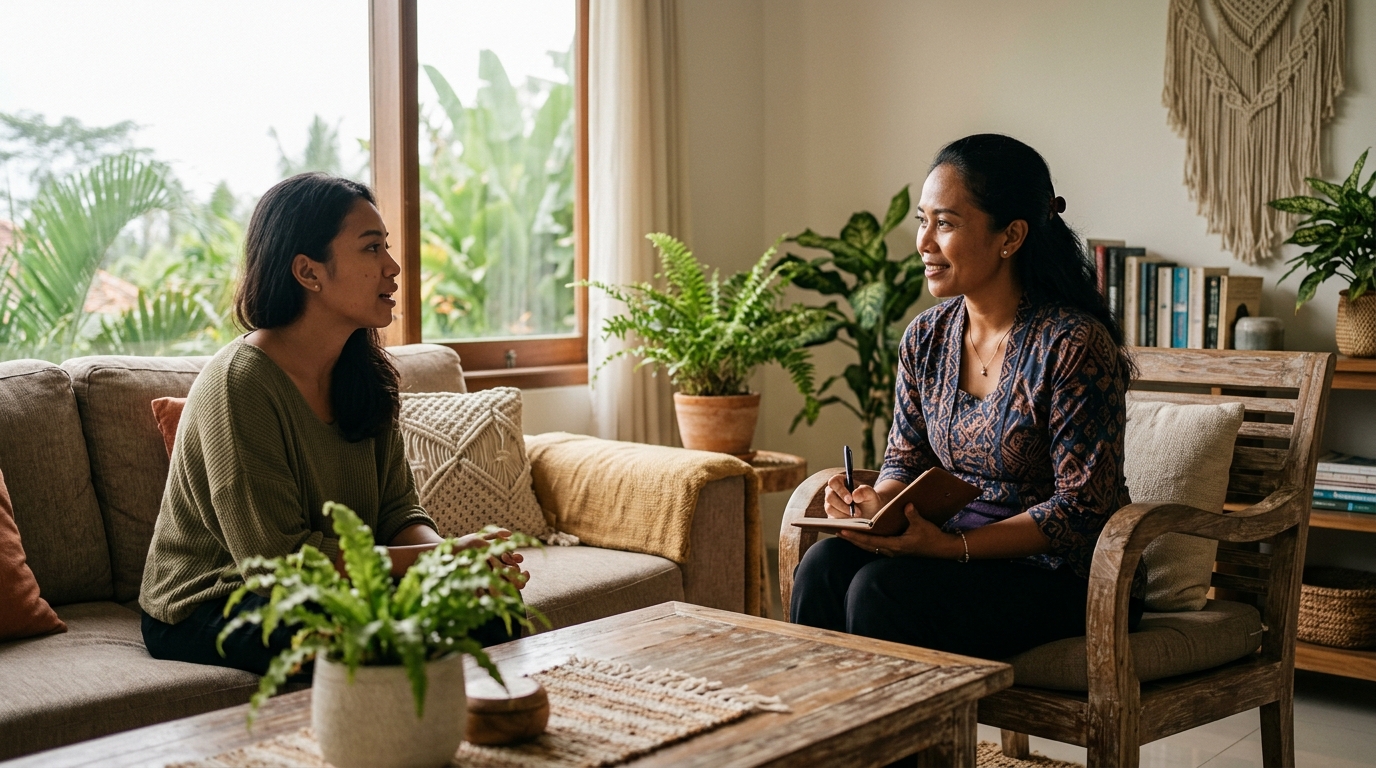
A counsellor helps clients work through emotional, psychological, and relational difficulties by providing structured, professional talk-based support in a confidential setting. Choosing the wrong practitioner can delay progress, erode trust, or in some cases cause genuine harm, so the decision deserves careful thought.
What to Look for in a Counsellor in Bali
Licensing and Credentials
In Indonesia, mental health practitioners should hold a recognised qualification in counselling, psychology, or psychotherapy from an accredited institution, along with registration under a relevant professional body such as the Indonesian Psychological Association (HIMPSI) or an internationally recognised equivalent. Expat and foreign counsellors practising in Bali should be able to show their home-country credentials and clarify their legal status for practising in Indonesia.
Insurance and Public Liability
A practising counsellor should carry professional indemnity insurance, which protects you if something goes wrong as a direct result of their professional advice or conduct. Ask specifically whether the policy is current and whether it covers online or remote sessions if that is how you plan to work together.
Experience and Specialisation
Counselling covers a wide range of presentations, including anxiety, grief, trauma, relationship difficulties, addiction, and expat adjustment issues, and not every practitioner is equally equipped for each area. Confirm that the counsellor has direct experience working with your specific concern, and ask how many clients they have supported with similar issues.
Reviews and Word of Mouth
Personal referrals from trusted friends, colleagues, or a GP remain one of the most reliable ways to find a counsellor in Bali. Online reviews on directories, Google, or community forums such as Bali Expats can provide useful additional context, though look for specific detail in reviews rather than short generic praise.
Transparent Quoting
A reputable counsellor will clearly state their session fees upfront, including whether they charge differently for individuals, couples, or families, and what their cancellation policy is. Be cautious of practitioners who are vague about fees or who introduce additional charges after sessions have begun.
Warranty and Guarantees
Ethical counsellors do not guarantee outcomes, because the nature of therapeutic work means progress depends on many factors including client engagement and readiness. What they can commit to is a clear treatment approach, regular reviews of progress, and transparent communication if the therapeutic relationship is not working.
Questions to Ask Before Hiring
- What qualifications do you hold, and are you registered with a professional body in Indonesia or your home country?
- Do you have experience working with clients dealing with [your specific issue, e.g. trauma, expat stress, grief]?
- What therapeutic approach or modality do you use, and why do you think it suits my situation?
- What are your session fees, session length, and cancellation or no-show policy?
- Do you offer sessions in English, and are you also available online if I need to travel or leave Bali?
- How do you handle confidentiality, and are there any circumstances under which you would share information about our sessions?
- What happens if I feel the sessions are not helping, and how do you review progress over time?
Red Flags to Watch Out For
- Red flag: The counsellor cannot name a specific professional qualification or declines to show credentials when asked directly.
- Red flag: They promise specific outcomes such as being “cured” or “fixed” within a set number of sessions, which no ethical practitioner can guarantee.
- Red flag: There is no clear confidentiality policy, or they are vague about when and how your information might be shared with others.
- Red flag: Fees change unexpectedly between sessions, or the practitioner pressures you to commit to a long block of sessions paid in advance before you have had an initial consultation.
- Red flag: They rely entirely on social media presence and testimonials but cannot provide any verifiable professional registration details or a clear business address in Bali.

Frequently Asked Questions
How long does it take to find a good Counsellor in Bali?
With a focused search using a reputable directory, expat community recommendations, or a GP referral, most people identify a suitable counsellor within one to two weeks. Allow additional time for an initial consultation, since finding the right therapeutic fit sometimes requires meeting more than one practitioner before committing.
What’s the average cost of a Counsellor in Bali?
Session fees in Bali vary considerably based on the practitioner’s background and clientele. Indonesian-qualified counsellors typically charge between IDR 300,000 and IDR 700,000 per session, while expatriate or internationally trained practitioners often charge USD 60 to USD 150 per session. Couples or specialist therapy sessions generally sit at the higher end of these ranges.
Do I need to get multiple quotes for Counsellors in Bali?
Speaking with at least two or three counsellors before committing is sensible, as fees, approaches, and experience levels differ considerably across Bali’s practitioner community. An initial consultation, which many counsellors offer at a reduced rate or free of charge, also helps you assess whether the working relationship feels comfortable before you invest further.
Choosing the right counsellor comes down to verified credentials, relevant experience with your specific concerns, clear and consistent fee structures, and a working relationship built on trust and transparency. Take the time to check professional registrations, ask direct questions during an initial consultation, and treat any vagueness around qualifications or fees as a reason to keep looking. For a vetted shortlist of practitioners, see the Best Counsellors in Bali (2026).