

Quick price summary: Villas in Bali (2026)
- Low end: USD $100,000 – $200,000
- Mid-range: USD $200,000 – $500,000
- High end / enterprise: USD $500,000 – $1,500,000+
Prices in USD (standard currency for Bali property transactions). Last updated 2026.
Buying or renting a villa in Bali covers a wide spectrum, from compact two-bedroom leasehold properties in up-and-coming neighbourhoods to sprawling freehold estates with private pools in Seminyak or Berawa. The Bali property market has matured considerably over the past several years, with villa prices in popular areas like Canggu, Ubud, Seminyak, and Sanur rising steadily as demand from both investors and lifestyle buyers continues to grow.
Costs vary significantly based on ownership structure (freehold versus leasehold), location, land size, build quality, and whether a villa is sold off-plan, completed, or fully furnished as a turnkey investment. A two-bedroom villa in a strategic Canggu location will carry a very different price tag from a spacious four-bedroom Japandi-style property in a peaceful Kerobokan neighbourhood, even if both sit within a few kilometres of each other. Understanding what drives those differences is the most practical starting point for any buyer or investor.

What Do Villas Cost in Bali?
Entry-level villas in Bali, typically two-bedroom leasehold properties in areas like Sanur, Umalas, or outer Canggu, start at around USD $100,000 to $200,000. These are usually off-plan or recently completed units with standard finishes and a lease term of 25 to 30 years. Mid-range villas, which represent the bulk of the Bali property market, sit between USD $200,000 and $500,000 and include well-designed three-bedroom properties in prime growth areas such as Berawa, Kerobokan, and Seminyak. At this price point, buyers typically receive a private pool, quality tropical or modern Balinese finishes, and strong rental appeal backed by proven short-stay performance data.
Luxury villas in Bali’s most sought-after locations, including beachside Seminyak, prime Berawa, and clifftop Uluwatu, range from USD $500,000 to well over $1,500,000. Large private estates with multiple bedrooms, rice field or ocean views, and freehold title can reach USD $850,000 or beyond. The Bali property market in 2026 remains one of Southeast Asia’s most attractive options for lifestyle buyers and yield-focused investors, with rental returns of 8 to 12 percent per annum achievable on well-located two- and three-bedroom villas in high-demand tourist corridors.
Price Breakdown by Service Level
| Service Level | What You Get | Typical Price Range | Best For |
|---|---|---|---|
| Budget / Entry-Level | Two-bedroom leasehold villa, standard finishes, shared or small private pool, off-plan or basic completed build in outer areas such as Sanur, Semer, or Padonan | USD $100,000 – $200,000 | First-time Bali investors, buyers with limited capital seeking rental income |
| Mid-Range | Two to three-bedroom villa with private pool, modern or tropical Balinese design, leasehold with 25+ year term, located in Canggu, Kerobokan, Umalas, or Ubud | USD $200,000 – $350,000 | Lifestyle buyers and investors seeking strong rental appeal and capital growth |
| Premium | Three to four-bedroom villa, high-spec finishes (Japandi, modern joglo, or chic tropical style), fully furnished turnkey, private pool, rice field or garden views, in Seminyak, Berawa, or Nyanyi | USD $350,000 – $600,000 | Experienced investors, part-time Bali residents, buyers seeking premium rental yields |
| Luxury / Freehold Estate | Four-bedroom-plus freehold property, large land component, beach access or ocean views, private estate setup, located in beachside Seminyak, prime Berawa, or Uluwatu clifftop | USD $600,000 – $1,500,000+ | High-net-worth buyers, full-time Bali residents, large-scale holiday rental operators |
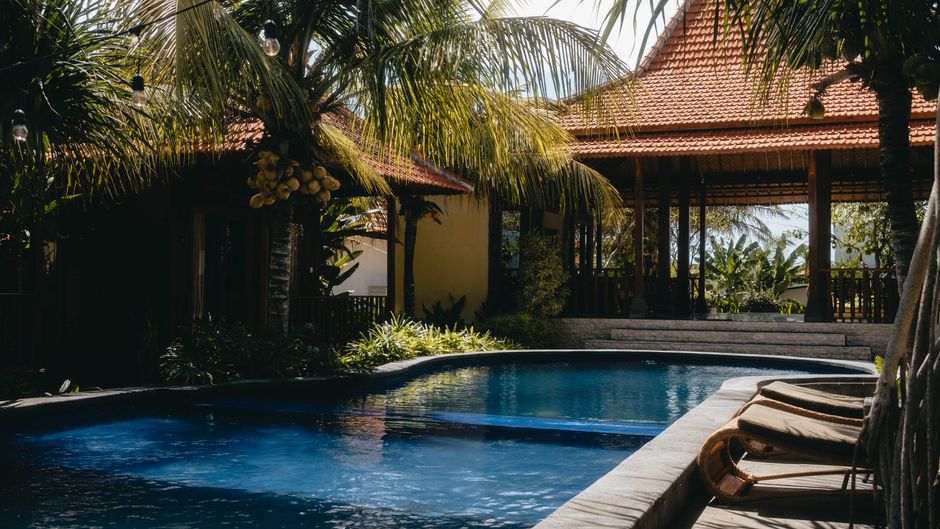
What Affects the Cost of Villas in Bali?
Location and area prestige
Location is the single biggest driver of villa prices in Bali. Seminyak and prime Berawa command the highest prices per square metre due to their proximity to the beach, established dining and retail scenes, and consistently strong tourist demand. Canggu and Kerobokan sit slightly below at a mid-to-premium price point, while areas like Sanur, Ubud, Umalas, and the increasingly popular Padonan corridor offer more affordable entry points with solid rental growth potential. Peaceful neighbourhoods like Kedampang-Kerobokan attract buyers seeking larger land parcels at competitive prices without being far from the action.
Freehold versus leasehold ownership
Freehold title (Hak Milik) is legally restricted to Indonesian citizens, so most foreign buyers purchase via leasehold (Hak Sewa or Hak Pakai). Leasehold villas with 25 to 30 year terms are priced 20 to 40 percent lower than comparable freehold properties. Longer leases of 50 to 80 years, increasingly common in newer developments, carry higher prices but offer stronger long-term security and are more attractive for resale.
Build quality and design style
Finished and fully furnished turnkey villas carry a price premium of 15 to 30 percent over off-plan or unfinished properties. A spacious Japandi-style three-bedroom villa or an elegant modern joglo in Berawa will attract a higher sale price and higher nightly rental rates than a comparable villa with basic tropical finishes. Build quality, ceiling heights, pool size, and the standard of outdoor living areas all feed directly into both the sale price and the rental yield potential.
Rental income history and occupancy rates
Villas with proven rental performance and documented occupancy rates command a meaningful premium over comparable properties without that track record. A two-bedroom villa in Canggu showing 75 to 85 percent occupancy and USD $350 or more per night during peak season is worth considerably more than an unproven unit next door, even with identical finishes. Buyers paying for rental history are effectively paying for reduced investment risk.
Off-plan versus completed property
Off-plan villas are typically priced 10 to 25 percent below equivalent completed stock, offering the opportunity for capital growth between purchase and settlement. The trade-off is construction risk and a delay before rental income begins. Completed and tenanted villas cost more but allow buyers to start generating returns immediately, which is increasingly attractive given the high demand for quality short-stay accommodation across Bali’s popular tourist corridors.
How to Get Accurate Quotes
- Define your budget, preferred ownership structure (freehold or leasehold), and target area before contacting any agents or developers. Buyers who search without a clear brief waste time and often get steered toward listings that suit the agent rather than the buyer.
- Contact at least three to four specialist Bali property agents or developers who operate in your preferred area. Agents focused on Canggu, Seminyak, or Sanur will have better stock knowledge and more accurate comparable sales data than generalist platforms.
- Request documented rental projections, not verbal estimates. Any reputable developer or agent selling an investment villa should be able to provide occupancy data, average nightly rates, and net yield figures based on comparable completed properties in the same area.
- Engage a licensed Indonesian property lawyer (notaris or PPAT) before signing any agreement. Legal fees for a standard villa purchase run approximately 1 to 3 percent of the purchase price. Budget for this from the start.
- Visit the property in person, or commission a property inspection if purchasing from abroad. Land certificates, building permits (IMB or PBG), and zoning classifications should be verified independently before any deposit is paid.
Red Flags to Watch Out For
- Lease terms shorter than 25 years offered without a clear extension clause. Villas with 15 to 20 year leases and no documented renewal option are difficult to resell and may struggle to attract quality tenants.
- Rental yield projections above 15 percent per annum with no supporting occupancy data. Genuine Bali villa yields of 8 to 12 percent are strong by any measure. Claims significantly above this should be verified against real comparable figures.
- No building permit (IMB or PBG) on a completed property, or a permit issued for residential use on a villa marketed as a commercial short-stay rental. Operating without the correct permits exposes buyers to closure orders and fines.
- Developers or agents who are unable to provide a clear land certificate (Sertifikat Hak Milik or Sertifikat Hak Guna Bangunan). Unverified land title is one of the most common sources of buyer disputes in the Bali property market.
- Unusually low prices in prime areas with little explanation. A two-bedroom villa in Seminyak priced at USD $120,000 when comparable stock sells at $280,000 or more almost always indicates a zoning issue, a disputed title, a very short lease, or an unfinished build with significant cost to complete.
- Pressure to sign quickly or pay a holding deposit before documentation has been reviewed. Reputable sellers in Bali allow time for due diligence. Any agent or developer rushing a buyer through the signing process is a serious warning sign.
Frequently Asked Questions
How much do villas cost in Bali on average?
The average price for a villa in Bali in 2026 sits between USD $200,000 and $400,000 for a two to three-bedroom leasehold property in a popular area. Entry-level options start around USD $100,000 in outer areas or for off-plan units. Luxury freehold properties in Seminyak, prime Berawa, or beachside Sanur typically start at USD $600,000 and rise well above $1,000,000 for large estate-style properties.
Why are some villas prices so much cheaper?
Lower prices usually reflect one or more of the following: a shorter lease term, an off-plan or unfinished build, a location further from the beach or tourist hub, a smaller land or pool area, or an unresolved issue with permits or land title. Genuinely affordable villas do exist in areas like Ubud, outer Canggu, and parts of Sanur, but any price that looks significantly below the market average for a given area warrants careful due diligence before purchase.
Is it worth paying more for villas in Bali?
For buyers seeking rental income, paying more for a villa in a prime location with documented occupancy history, a long lease, and quality finishes typically delivers stronger net returns over time than buying the cheapest available option. A well-located premium villa in Berawa or Seminyak with strong rental appeal will outperform a budget property in a less established area across most holding periods. For lifestyle buyers, the additional cost of a well-designed property in a convenient, secure location generally justifies itself in day-to-day livability.
Bali’s villa market in 2026 rewards buyers who do their research, work with property specialists who know specific areas well, and approach the purchase process with clear criteria. Whether you are buying a compact two-bedroom investment villa in Canggu or a spacious four-bedroom tropical estate near the beach, the price you pay should reflect verifiable land title, appropriate permits, a realistic rental outlook, and a lease structure that protects your investment for the long term. Taking the time to compare multiple properties across your target areas, and getting independent legal advice before signing, are the two steps most likely to result in a sound purchase at a fair price.
For a curated list of top-rated providers, see our guide: Best Villas in Bali (2026).