Quick price summary: Restaurants in Bali (2026)
- Low end: IDR 15,000 – IDR 50,000 per meal (USD 1 – USD 3) at warungs and street food stalls
- Mid-range: IDR 80,000 – IDR 300,000 per meal (USD 5 – USD 18) at casual restaurants and cafes
- High end / enterprise: IDR 400,000 – IDR 2,000,000+ per person (USD 25 – USD 125+) at fine dining venues
Prices in IDR and USD. Last updated 2026.
Bali’s food scene runs the full spectrum from IDR 15,000 nasi goreng eaten on a plastic stool to multi-course tasting menus that rival any major city in the world. The island feeds backpackers, digital nomads, families, and luxury travellers across thousands of restaurants, warungs, beach clubs, and street food stalls spread across Seminyak, Canggu, Ubud, Kuta, and beyond. Understanding where your money goes before you arrive saves you both frustration and unnecessary expense.
Prices vary sharply depending on the area of the island, the style of the venue, and whether you are eating local Indonesian food or imported international cuisine. A bowl of soto ayam in a Ubud warung costs a fraction of what a beef tenderloin costs at a Seminyak fine dining restaurant, even if both meals are genuinely delicious. Location, ingredients, ambience, and tourist foot traffic all push costs in different directions, so knowing the landscape before you sit down to eat makes a real difference to your daily budget.

What Do Restaurants Cost in Bali?
At the lowest end, street food and warung meals sit between IDR 15,000 and IDR 50,000 per dish (roughly USD 1 to USD 3). Warungs are small family-run restaurants, often just a handful of tables under a simple roof, serving nasi campur, mie goreng, satay, and fresh fruit juices. These are where locals eat daily and where budget travellers stretch their money furthest. A full day of eating at this level costs USD 5 to USD 10 per person without much effort.
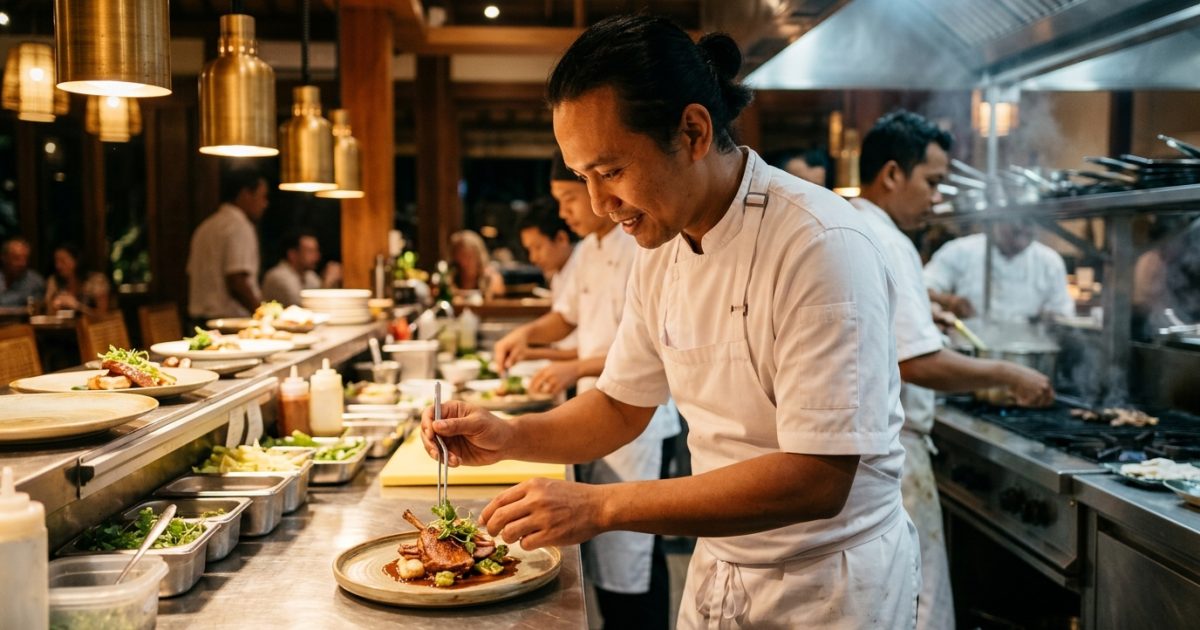
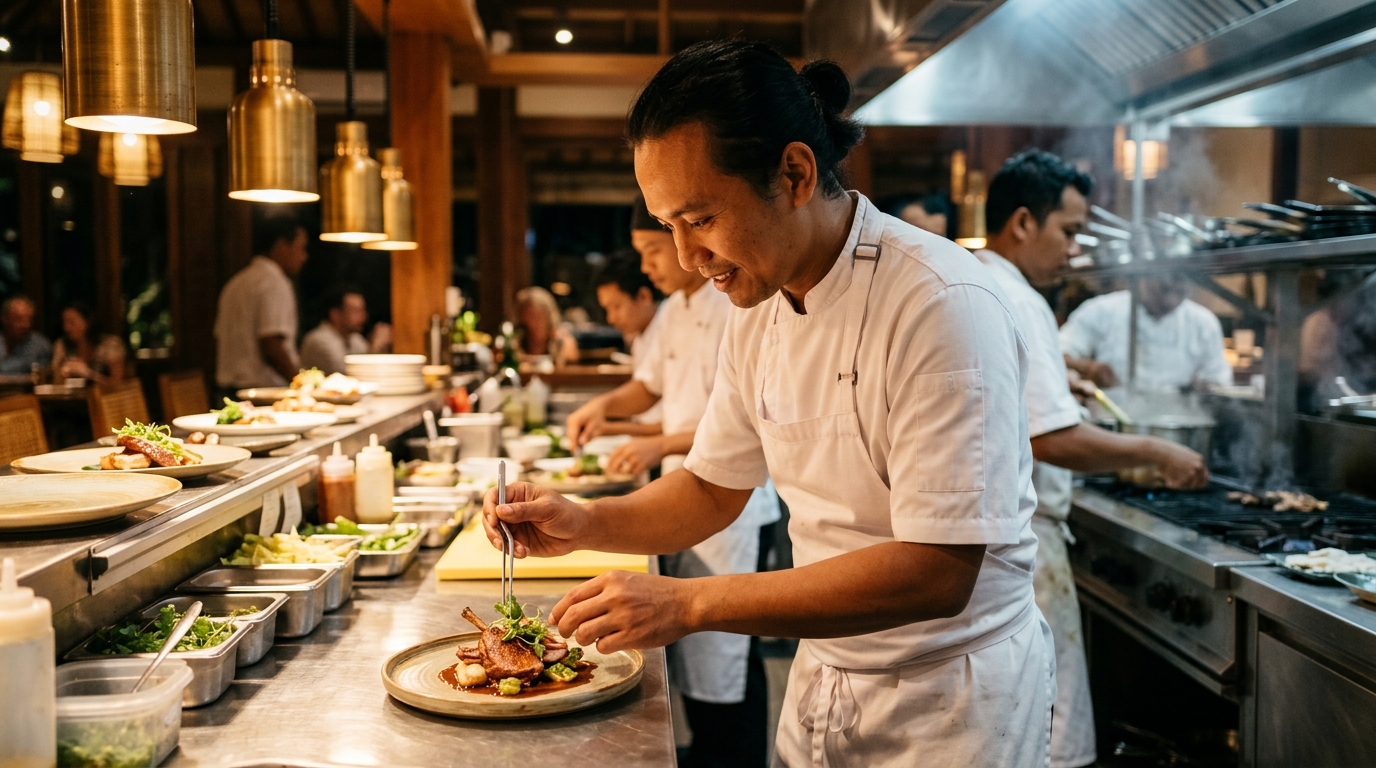
Casual restaurants and cafes in areas like Canggu and Ubud typically charge IDR 80,000 to IDR 250,000 per main course (USD 5 to USD 15), with many popular brunch spots and coffee shops sitting comfortably in this range. Mid-range sit-down restaurants in Seminyak push toward IDR 200,000 to IDR 400,000 per person for a two-course meal with a drink. Fine dining in Bali starts around IDR 600,000 per person and can reach IDR 2,000,000 or more at venues that occasionally invite internationally recognised chefs or offer degustation menus with wine pairings. The island’s fine dining scene has grown substantially, with venues in Seminyak and Ubud regularly appearing in regional best-restaurant lists.
Price Breakdown by Service Level
| Service Level | What You Get | Typical Price Range (per person) | Best For |
|---|---|---|---|
| Street Food and Warungs | Indonesian staples cooked fresh, minimal decor, communal or plastic seating, no alcohol licence | IDR 15,000 – IDR 50,000 (USD 1 – USD 3) | Budget travellers, authentic local food experience, daily eating |
| Casual Cafes and Restaurants | Western and Indonesian menus, air conditioning or open-air settings, coffee, smoothies, reliable Wi-Fi at many spots | IDR 80,000 – IDR 250,000 (USD 5 – USD 15) | Digital nomads, couples, travellers wanting comfort without high spend |
| Mid-Range Dining | Full table service, curated menus, cocktail lists, better locations in Seminyak or Ubud, some imported ingredients | IDR 250,000 – IDR 600,000 (USD 15 – USD 37) | Special dinners, groups, travellers seeking a quality experience at a reasonable cost |
| Fine Dining and Luxury | Multi-course menus, wine lists, high-end decor, professional service, ocean or rice terrace views, reservation required | IDR 600,000 – IDR 2,000,000+ (USD 37 – USD 125+) | Celebrations, luxury travellers, food-focused visitors |

What Affects the Cost of Restaurants in Bali?
Location on the island
Seminyak and Kerobokan consistently run the highest restaurant prices on the island because the area attracts affluent tourists and the real estate costs are significant. Canggu sits just below, with a mix of affordable local spots and trendy cafes charging a premium for atmosphere. Ubud is the sweet spot for mid-range food at a fair price, with a well-developed food scene that includes excellent Indonesian, vegan, and international options. Kuta remains one of the cheapest areas for sit-down meals, though quality varies. Nusa Dua hotels inflate food prices further, as dining is often tied to resort packages.
Cuisine type and ingredient sourcing
Local Indonesian dishes use widely available, low-cost ingredients and remain affordable across most venues. Restaurants serving imported beef, seafood, or Western staples pay significantly more for ingredients, and those costs pass directly to the customer. A pasta dish using imported Italian durum wheat costs three to four times more than a locally sourced nasi campur at the same level of restaurant. Menus at international restaurants in Seminyak reflect import duties, cold-chain logistics, and the scarcity of consistent supply.
Tourist versus local pricing
Some warungs and small restaurants operate with a degree of tourist pricing, particularly near popular spots in Kuta, Ubud’s main street, and beach clubs along the Seminyak strip. Prices at these venues can be 30 to 50 percent higher than at a warung two streets back serving the same food to locals. Checking Google Maps reviews and cross-referencing prices before sitting down is straightforward and avoids surprises on the bill.
Service charges and taxes
Most mid-range and fine dining restaurants in Bali add a 10 percent government tax (PPN) and a 5 to 10 percent service charge on top of listed menu prices. This means a IDR 200,000 meal can become IDR 230,000 to IDR 240,000 once the bill arrives. Budget restaurants and warungs rarely add these charges. Always check whether a menu states “plus plus” (meaning tax and service are additional) or whether prices are inclusive.
Booking platform and advance reservation
Popular fine dining venues in Bali, particularly those with limited covers or a specific view, require advance booking and sometimes a deposit. Reservations are typically made via WhatsApp, live chat on the restaurant’s website, or Instagram direct message. Walk-ins at these venues are often not possible during peak season (July, August, and December). Booking ahead does not usually change the price, but it determines whether you can access the venue at all during busy periods.
How to Get Accurate Quotes
- Check the restaurant’s current menu online before visiting. Many Bali restaurants post menus on Instagram or their website, and these are usually up to date. Prices on aggregator sites like TripAdvisor can be 12 to 18 months behind actual pricing.
- Confirm whether the listed prices include tax and service. Look for “nett” (inclusive) or “plus plus” (exclusive) on the menu. If it is unclear, ask before ordering.
- For fine dining or popular venues, contact the restaurant directly via WhatsApp or Instagram to confirm availability and any set menu requirements. Many popular Ubud and Seminyak restaurants operate fixed tasting menus on certain nights.
- Use Google Maps reviews filtered by recency to check what other diners paid within the past three to six months. Photos of bills and menus appear regularly in reviews and give a reliable real-world price check.
- For group dining or events, ask the venue directly about set menus or minimum spends. Many mid-range and fine dining restaurants offer group packages that reduce per-head cost compared to ordering à la carte.
Red Flags to Watch Out For
- Menus with no prices listed, particularly at tourist-facing venues near beaches or popular attractions. Always ask for a priced menu before sitting down.
- Restaurants that add unexplained charges to the bill, such as a “table fee” or “amenity charge” that was not disclosed upfront. This is uncommon but does occur at some beach club adjacent venues.
- Street food stalls quoting prices verbally rather than displaying a menu board. Prices can shift depending on the perceived budget of the customer. Confirm the cost before ordering.
- Fine dining venues with no verifiable online presence, no recent reviews, and no booking system. Legitimate high-end restaurants in Bali maintain active Instagram accounts and respond to reservation enquiries promptly.
- Restaurants that pressure you to order a minimum amount or add items to your order without asking. This occasionally happens at tourist-oriented seafood spots where the final bill does not match the menu.
- Heavily discounted deals promoted through tour operators or hotel concierge services. These sometimes come with restricted menus or inflated original prices that make the discount meaningless.

Frequently Asked Questions
How much do restaurants cost in Bali on average?
The average cost per person depends entirely on where and how you eat. A typical day of eating across all meals at a warung-focused budget runs USD 5 to USD 15 per person. Eating at casual cafes and mid-range restaurants brings this closer to USD 20 to USD 50 per day. Fine dining for a single dinner can add USD 50 to USD 125 or more per person. Most visitors eating across a mix of local warungs and occasional mid-range restaurants spend around USD 20 to USD 35 per day on food in Bali.
Why are some restaurants prices so much cheaper?
Warung-style restaurants and street food stalls keep costs low because they use locally sourced ingredients, employ small family teams, operate with minimal overhead, and serve a high volume of dishes throughout the day. They do not pay for imported goods, extensive fit-outs, or large front-of-house teams. A warung nasi campur costs IDR 20,000 to IDR 35,000 because the rice, vegetables, tempeh, and sambal that make up the dish are all produced locally at very low cost. The gap between this and a fine dining plate using imported protein and a trained kitchen team is simply the gap between two entirely different cost structures.
Is it worth paying more for restaurants in Bali?
For everyday meals, the best food in Bali is often the cheapest. Authentic Balinese and Indonesian cooking at a local warung is frequently better than the same dishes served at a tourist-oriented mid-range restaurant at three times the price. Paying more is worth it when you are eating internationally sourced cuisine prepared by trained chefs, dining at a venue with a genuinely exceptional setting (a rice terrace in Ubud or a clifftop view in Uluwatu), or celebrating a specific occasion. Bali’s fine dining scene has grown to a point where the quality at the top end justifies the cost, but the value at the bottom end is hard to beat anywhere in Southeast Asia.
Eating well in Bali does not require a large budget, but knowing where the costs shift and why makes every meal a better decision. Street food and warungs cover the authentic end of the island’s food culture at minimal expense, casual restaurants and cafes handle the daily mid-range need comfortably, and fine dining in areas like Seminyak and Ubud delivers a genuine high-end experience for those planning a special evening. Matching the venue to your expectation and confirming prices before ordering keeps every meal straightforward, wherever you eat across the island.
For a curated list of top-rated providers, see our guide: Best Restaurants in Bali (2026).