Quick price summary: Cafes in Bali (2026)
- Low end: IDR 25,000 – IDR 60,000 per item (approx. USD 1.50 – USD 3.75)
- Mid-range: IDR 60,000 – IDR 120,000 per item (approx. USD 3.75 – USD 7.50)
- High end / enterprise: IDR 120,000 – IDR 250,000+ per item (approx. USD 7.50 – USD 15.50+)
Prices in IDR and USD. Last updated 2026.
Bali’s cafe scene has expanded well beyond a few tourist-facing coffee shops. From Canggu’s rice field cafes popular with digital nomads to Ubud’s jungle-edged brunch spots and Seminyak’s polished all-day dining rooms, the island now offers a range of cafe experiences that rivals major capital cities. A cup of espresso can cost you IDR 28,000 at a local warung-style cafe or IDR 75,000 at a specialty roaster in Canggu serving single-origin Balinese beans. Knowing the difference matters before you sit down and order.
Prices vary because of location, concept, ingredient sourcing, and the type of crowd a venue targets. A casual Indonesian cafe near Ubud’s rice fields operates with entirely different overheads compared to a premium Seminyak cafe with imported dairy, air conditioning, curated interiors, and fast, reliable Wi-Fi built for remote workers. This guide breaks down what you should expect to pay across different types of cafes in Bali in 2026, so you can plan your spending whether you’re visiting for a morning coffee or setting up a full work day.
What Do Cafes Cost in Bali?
For most visitors, a typical spend at a mid-range Bali cafe runs between IDR 80,000 and IDR 180,000 per person, which covers a coffee and a meal such as an acai bowl, nasi goreng, or a stack of pancakes. At the lower end, local Indonesian cafes and street-adjacent spots charge IDR 25,000 to IDR 40,000 for a cup of good coffee and IDR 30,000 to IDR 60,000 for a simple breakfast plate. Premium cafes in Canggu and Seminyak, particularly those catering to digital nomads with fast Wi-Fi, comfortable seating, and international menus featuring items like acai bowls, vegan fare, and mediterranean-inspired breakfasts, typically charge IDR 85,000 to IDR 130,000 for a main dish and IDR 60,000 to IDR 90,000 for specialty coffee drinks.
Ubud sits in the middle of this range. Cafe culture there leans toward organic and plant-based menus, with places like Alchemy Ubud offering raw food bowls and cold-pressed juice at IDR 70,000 to IDR 120,000 per item. Canggu cafes such as Crate Cafe and Suka Espresso operate at similar price points but draw a busier, more international crowd, which keeps prices consistently higher than neighbourhood Indonesian spots. A full brunch at a popular Canggu cafe including coffee, a bowl or egg dish, and juice will typically cost IDR 150,000 to IDR 250,000 per person.
Price Breakdown by Service Level

| Service Level | What You Get | Typical Price Range | Best For |
|---|---|---|---|
| Local / Warung-Style | Nasi goreng, mie goreng, sweet black coffee or Balinese coffee, simple juice, basic seating | IDR 25,000 – IDR 60,000 per item | Budget travellers, authentic Indonesian cafe culture, quick meals |
| Mid-Range Neighbourhood Cafe | Espresso-based drinks, pancakes, toast, smoothie bowls, casual indoor or open-air seating, basic Wi-Fi | IDR 60,000 – IDR 120,000 per item | Everyday visits, relaxed mornings, short work sessions |
| Premium / Specialty Cafe | Single-origin coffee, full brunch menus including vegan and mediterranean-inspired breakfasts, acai bowls, fast reliable Wi-Fi, comfortable seating, curated interiors | IDR 120,000 – IDR 180,000 per item | Digital nomads, brunch crowds, quality coffee seekers, longer work days |
| High-End / Destination Cafe | Chef-driven menus, specialty cold brew and filter programmes, imported ingredients, premium views over rice fields or ocean, full table service | IDR 180,000 – IDR 250,000+ per item | Special occasions, food-focused visitors, Instagram-driven destination dining |
What Affects the Cost of Cafes in Bali?
Location within Bali
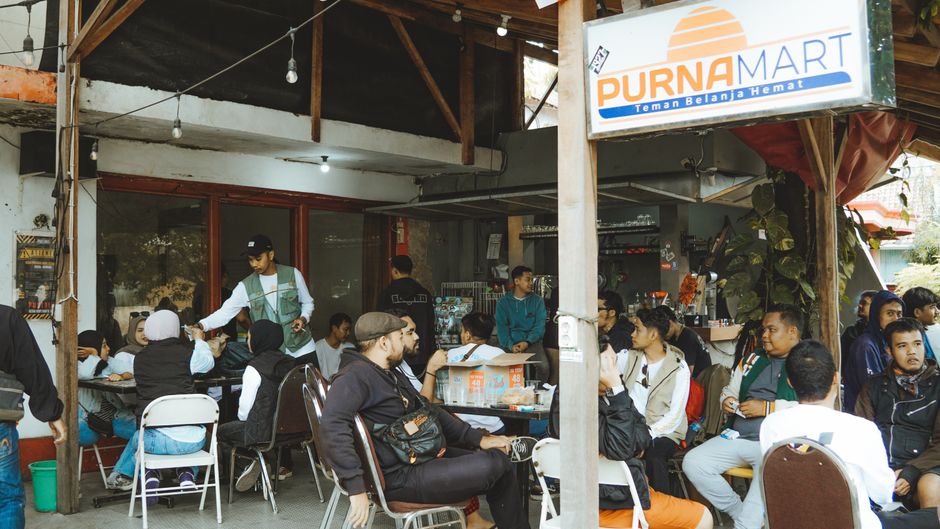
Cafes in Canggu and Seminyak charge more than those in Ubud or quieter areas of Pererenan and Cemagi. High foot traffic, expensive shopfront rents in tourist-heavy zones, and proximity to digital nomad communities all push prices up. A comparable brunch dish can cost IDR 40,000 to IDR 60,000 more in central Canggu than at a cafe just two kilometres away near the rice fields.
Menu Ingredients and Sourcing
Cafes that import ingredients, use locally sourced organic produce, or operate a kitchen with trained chefs charge noticeably more. An acai bowl at a cafe using Brazilian acai imports costs more than a similar bowl made with local fruit. Vegan and wholesome mediterranean-inspired breakfast menus with quality proteins, imported cheeses, and cold-pressed juices also carry higher menu prices to cover ingredient costs.
Wi-Fi, Power and Digital Nomad Infrastructure
Cafes that invest in fast, reliable Wi-Fi and sufficient power plugs across their seating areas are specifically targeting the digital nomad market and price accordingly. Some popular Canggu cafes charge a minimum spend of IDR 80,000 to IDR 100,000 per person per session to maintain their working environment. This minimum spend policy is common and worth confirming before you set up for the day.
Seating Capacity and Ambience
Larger cafes with comfortable seating, good airflow or air conditioning, and a breezy tropical aesthetic cost more to run and price their menus to reflect that. Smaller, casual spots with plastic chairs and open-air street-facing setups keep overheads low and pass that on in lower prices. Cafes with rice field views or curated garden spaces also command a premium simply for the setting.
Coffee Programme Quality
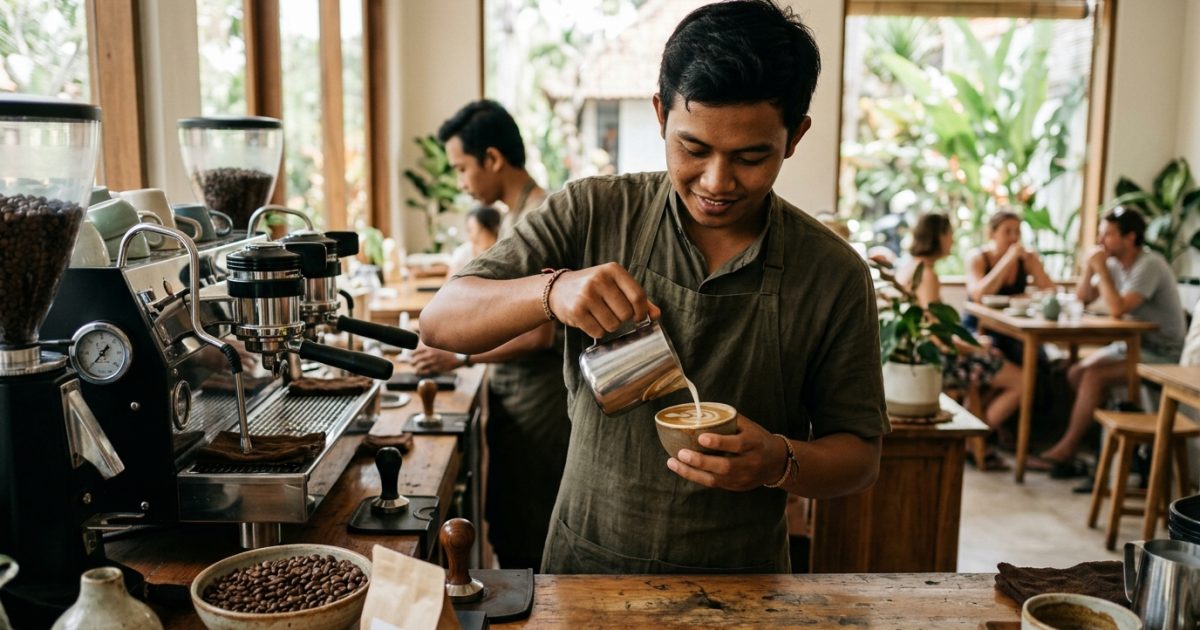
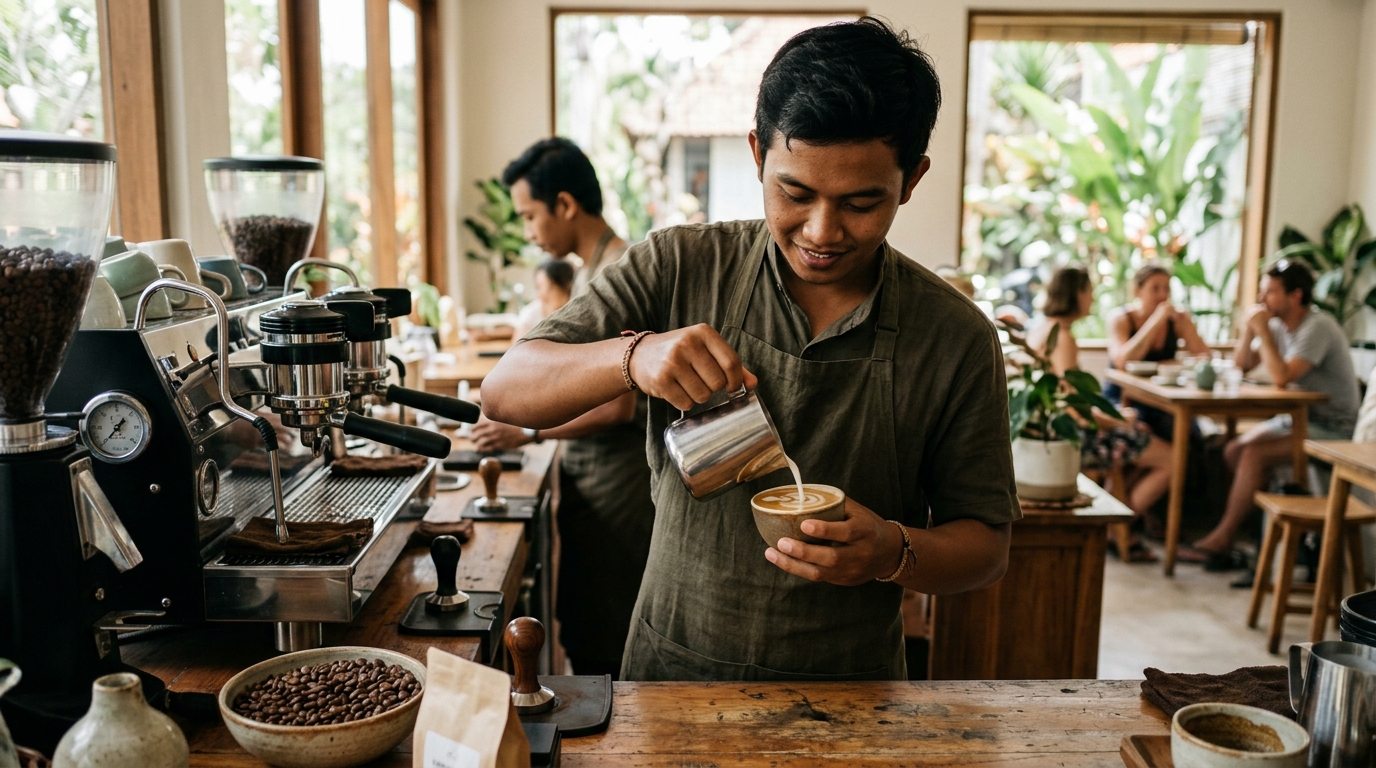
The quality of the coffee itself moves prices significantly. A cafe running a serious espresso programme with trained baristas, calibrated grinders, and freshly roasted single-origin beans from Kintamani or Flores will charge IDR 55,000 to IDR 85,000 for a flat white. A street-adjacent cafe using commercial blends will charge IDR 20,000 to IDR 35,000 for a similar drink. Both can produce good coffee, but the experience and consistency differ.
How to Get Accurate Quotes
- Check the cafe’s menu online before visiting. Most popular Bali cafes in Canggu, Seminyak, and Ubud publish menus on Instagram or Google Maps, which gives you a realistic price expectation before you arrive.
- Confirm the minimum spend policy if you plan to work. Cafes popular with digital nomads often require a minimum purchase per session. Ask at the counter or look for a sign near the entrance.
- Factor in service charges and tax. Most mid-range to premium cafes add a service charge of 5 per cent to 10 per cent and a government tax of 10 per cent on top of listed menu prices. Your IDR 90,000 coffee and cake order may cost closer to IDR 108,000 after charges.
- Compare price-per-meal across areas before choosing a neighbourhood base. If you plan to spend multiple days working from cafes, choosing a base in Pererenan or the quieter parts of Ubud rather than central Canggu can save IDR 50,000 to IDR 80,000 per day without sacrificing cafe quality.
- Read recent Google or TripAdvisor reviews for current pricing. Menu prices in Bali can shift by 10 per cent to 20 per cent between years, particularly after peak tourist seasons. Reviews from the past three to six months give the most accurate picture.
Red Flags to Watch Out For

- No menu prices displayed and staff who quote verbally without a written menu. This is uncommon in reputable cafes but does happen in heavily tourist-facing areas where prices are adjusted based on perceived spending power.
- Cafes advertising free Wi-Fi but offering a speed of under 10 Mbps. If you need to work reliably, ask staff to show you the current speed test before you order and set up.
- Very cheap brunch menus in premium-looking spaces. A full acai bowl, coffee, and juice for IDR 60,000 at a styled Canggu cafe should prompt a question about ingredient quality or hidden charges appearing on the bill.
- Overcrowded cafes with no available power points. Popular Canggu spots like Crate Cafe fill up fast by 9am. Arriving to find no seating or no power access after purchasing a meal is a common frustration during peak season.
- Mandatory cash payment with no ATM nearby. Some smaller cafes in Ubud and Pererenan do not accept card. Confirm payment options before ordering, especially if you are carrying limited cash.
- Menus with no date or that haven’t been updated in the cafe’s Google profile since 2023 or earlier. Prices listed may no longer reflect what the cafe charges, leading to surprises at checkout.
Frequently Asked Questions

How much do cafes cost in Bali on average?
A typical visit to a mid-range Bali cafe costs IDR 100,000 to IDR 200,000 per person, covering one coffee and one food item such as a bowl, pancakes, or a toast plate. Local Indonesian cafes are cheaper, running IDR 30,000 to IDR 70,000 for a coffee and a simple nasi or mie dish. Premium cafes in Canggu and Seminyak with full brunch menus can reach IDR 200,000 to IDR 350,000 per person once drinks, food, and tax are added.
Why are some cafes prices so much cheaper?
Indonesian-owned local cafes and warungs operate with far lower overheads than expat-run or internationally marketed cafes. They use local ingredients, employ smaller teams, and often occupy rented space in residential areas rather than high-traffic tourist zones. A Balinese coffee and nasi goreng at a local spot reflects actual local cost of living, while a specialty flat white and acai bowl at a Canggu cafe reflects imported ingredients, trained staff, rent in a competitive area, and the experience the cafe is deliberately creating for an international market.
Is it worth paying more for cafes in Bali?
For most visitors and digital nomads, yes, on some days. Premium cafes in Canggu, Ubud, and Seminyak offer consistent quality, reliable Wi-Fi, comfortable seating, and food that is genuinely good, from wholesome mediterranean-inspired breakfasts to well-made acai bowls and single-origin espresso. If you are spending a full work day at a cafe, paying IDR 150,000 to IDR 200,000 for a productive, comfortable environment is reasonable. For a quick coffee stop, a local cafe at IDR 25,000 to IDR 40,000 is often just as satisfying and far better value.
Bali’s cafe culture in 2026 offers something at almost every price point, from a IDR 25,000 Balinese black coffee at a neighbourhood warung to a IDR 200,000 single-origin brunch spread with rice field views in Canggu. Knowing where you sit in that range, and what you actually need from a cafe visit, is the most practical way to spend well and avoid overpaying for things that don’t matter to you.
For a curated list of top-rated providers, see our guide: Best Cafes in Bali (2026).