Quick price summary: Tailors in Bali (2026)
- Low end: IDR 150,000 – IDR 500,000 (approx. USD 9 – USD 30) per item
- Mid-range: IDR 500,000 – IDR 2,500,000 (approx. USD 30 – USD 155) per item
- High end / enterprise: IDR 2,500,000 – IDR 15,000,000+ (approx. USD 155 – USD 935+) per item
Prices in IDR and USD equivalents. Last updated 2026.
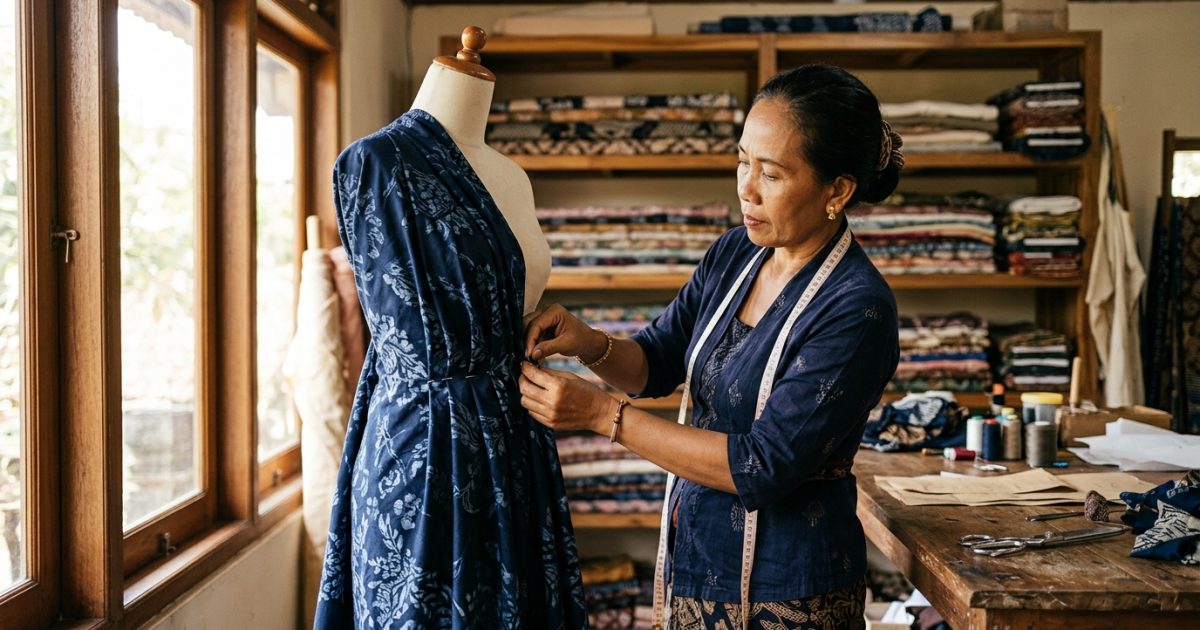
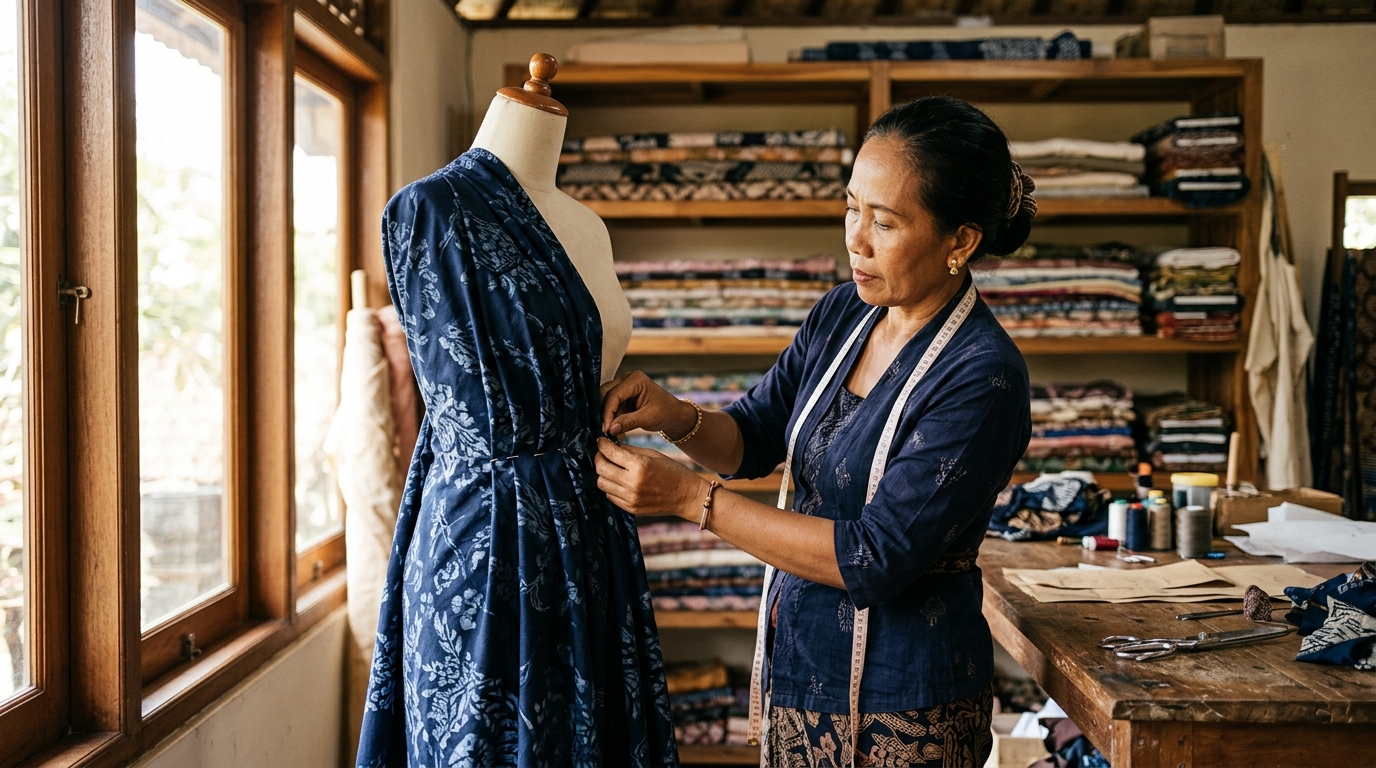
Bali has built a genuine reputation as one of Southeast Asia’s best places for custom clothing. Tailors across Seminyak, Kuta, Canggu, Ubud, and Kerobokan offer everything from simple alterations and copy jobs to full custom suits, wedding dresses, and couture-level dressmaking. The range of services is wide, and so is the price range, which makes it worth understanding what you’re actually paying for before you hand over a deposit.
Costs vary significantly depending on the complexity of the garment, the fabric chosen, the tailor’s experience, and the area of Bali. A basic alteration at a local shop in Kuta will cost a fraction of what a premium Seminyak atelier charges for a bespoke wedding dress. Location, turnaround time, and whether you’re bringing your own fabric or designs also play a real role in the final price.

What Do Tailors Cost in Bali?
For straightforward items, expect to pay between IDR 150,000 and IDR 500,000 (roughly USD 9 to USD 30) for basic alterations or simple garments like a cotton shirt or casual dress. Standard custom-made clothes, including men’s trousers, women’s blouses, or a fitted jacket, typically fall in the IDR 500,000 to IDR 2,500,000 range (USD 30 to USD 155). This is where most visitors to Bali spend their money, and the quality at this level can be genuinely impressive.
At the premium end, tailors producing custom suits, leather garments, wedding dresses, or couture-level work charge IDR 2,500,000 to IDR 15,000,000 or more (USD 155 to USD 935+). Well-known names such as Anika Tailor in Kuta and Linen by Anika in Seminyak sit in the mid-to-high range, while specialist ateliers in Seminyak and Canggu producing wedding dresses or designer-quality copies can exceed USD 1,000 for complex pieces. Many tailors will also ship internationally, which adds to the convenience for visitors who can’t wait for multiple fittings in person.
Price Breakdown by Service Level
| Service Level | What You Get | Typical Price Range | Best For |
|---|---|---|---|
| Basic | Alterations, hemming, repairs, simple copy of an existing item in local fabric | IDR 150,000 – IDR 500,000 (USD 9 – USD 30) | Tourists needing quick fixes, budget clothing adjustments |
| Standard | Custom-made shirts, dresses, trousers, jackets from your design or a reference photo; fabric chosen from shop stock | IDR 500,000 – IDR 2,500,000 (USD 30 – USD 155) | Visitors wanting made-to-measure everyday clothes or holiday wear |
| Premium | Fully custom suits, leather goods, formal wear, copy of a designer garment (such as a Valentino or Saint Laurent style), multiple fittings, quality imported fabrics | IDR 2,500,000 – IDR 7,000,000 (USD 155 – USD 435) | Business travellers, wedding guests, people copying high-end designs |
| High End / Custom Couture | Wedding dresses, full couture collections, complex embroidery or beading, artisanal craftsmanship with top-grade fabrics, international shipping arranged | IDR 7,000,000 – IDR 15,000,000+ (USD 435 – USD 935+) | Brides, fashion buyers, designers sourcing production in Bali |

What Affects the Cost of Tailors in Bali?
Fabric choice
Fabric is often the biggest variable in any quote. Local Indonesian cottons, linens, and batiks are affordable and widely available. Imported materials, including quality wool for suits, silk, or leather, can cost significantly more. Some tailors charge for fabric separately; others include it in a package price. If you bring your own fabric, you can often reduce the total cost, though some tailors charge a small fee to compensate for their lower margin.
Garment complexity
A simple shirt takes far less time and skill than a structured jacket or a fitted wedding dress with boning and detailed work. Garments requiring multiple pattern pieces, lining, interfacing, or detailed hand-finishing will always cost more. Copies of complex designer pieces (referencing labels like Yves Saint Laurent, Valentino, or Louis Vuitton in style) require more cutting and fitting time, which is reflected in the price.
Number of fittings
Most reputable tailors in Bali include one or two fittings in their quoted price. If you need additional fittings for a complex item, or if significant changes are required between fittings, some tailors charge extra. For visitors on short trips, clarifying how many fittings are included and how many days the order will take is important before committing.
Tailor’s location and reputation
Shops in tourist-heavy areas like Seminyak and Kerobokan tend to charge more than tailors in residential neighbourhoods or in Ubud. Established names with strong word-of-mouth, such as Anika Tailor and Nikki Collections Tailor and Leather in Seminyak, price accordingly. Newer or smaller local tailors may offer similar quality at lower rates, but require more research to verify their work.
Turnaround time
Standard orders in Bali typically take three to seven days. Rushing an order to one or two days often attracts a premium of 20 to 50 per cent on the base price. If you’re visiting Bali for a short period, factor this into your planning and place orders as early in your stay as possible.
How to Get Accurate Quotes
- Bring a reference item or image. Whether you want a copy of a garment you already own or a photo of a design you like, having a clear visual makes it far easier for the tailor to quote accurately. Vague descriptions lead to vague pricing.
- Ask for the quote to be itemised. Request a breakdown of fabric costs and labour costs separately. This helps you compare quotes across multiple tailors and understand where the money is going.
- Confirm the number of fittings included and the expected completion date. Get both confirmed in writing (even a WhatsApp message works well in Bali) before paying a deposit.
- Check whether the fabric you want is in stock or needs to be ordered. Some fabrics must be sourced from Jakarta or imported, which can add days to the timeline and cost to the quote.
- Visit at least two or three tailors before committing. Prices and quality vary enough that a quick visit to compare workmanship and quotes is worth the extra hour of your time.
Red Flags to Watch Out For
- A tailor who quotes a price before seeing your design or understanding the garment. Accurate pricing requires knowing the fabric, complexity, and your measurements.
- No deposit structure. Reputable tailors typically ask for 30 to 50 per cent upfront. A tailor who asks for full payment before starting the work offers you no recourse if the result is poor.
- Promises of a one-day turnaround for a complex item like a suit or wedding dress. Quality tailoring on complex garments takes time; a 24-hour promise on a fitted jacket is a warning sign, not a selling point.
- Reluctance to show previous work or customer examples. Good tailors are proud of their craftsmanship. If a shop can’t show you finished examples or has no reviews or photos, treat that as a caution.
- Vague fabric descriptions. A tailor who can’t tell you the fibre content or origin of the fabric they’re recommending may be substituting a cheaper material than you’re expecting.
- No fitting offered for custom-made garments. Even straightforward items like trousers should involve at least one fitting for a made-to-measure result. Skipping fittings entirely suggests the tailor is cutting corners on the process.
Frequently Asked Questions
How much do tailors cost in Bali on average?
For most visitors, the average spend on a single custom-made item sits between IDR 500,000 and IDR 2,000,000 (approximately USD 30 to USD 125). Alterations and simple items come in well below this. A full suit or formal dress can push into the IDR 3,000,000 to IDR 7,000,000 range (USD 185 to USD 435), depending on fabric and tailor.
Why are some tailors prices so much cheaper?
Lower prices usually reflect one or more of the following: cheaper local fabric rather than imported material, less experienced staff, faster production with fewer fittings, or a simpler garment type. Some small local tailors in residential areas genuinely offer good work at low prices simply because their overheads are lower. The risk with very cheap quotes is that fabric quality, finishing, and fit may all suffer. For anything you plan to wear regularly or for a special occasion, paying mid-range rates at a tailor with verifiable reviews is worth it.
Is it worth paying more for tailors in Bali?
Yes, for complex or important garments. A wedding dress, a well-cut suit, or a leather jacket produced by an experienced Bali tailor at the premium price point can deliver results that rival what you’d pay far more for elsewhere. Bali’s artisanal craftsmanship reputation is well-earned at the upper end of the market, and good communication with your chosen tailor, combined with clear references and a realistic timeline, is what separates a successful order from a disappointing one.
Bali offers genuine value for custom clothing across a broad range of budgets, from quick alterations to full couture work. The key is matching your budget to the right service level, asking the right questions before you commit, and giving your tailor enough time to do the job properly. Visitors who plan ahead, bring clear designs or reference items, and choose tailors with a track record consistently come away with pieces they’re happy to wear long after they leave the island.
For a curated list of top-rated providers, see our guide: Best Tailors in Bali (2026).