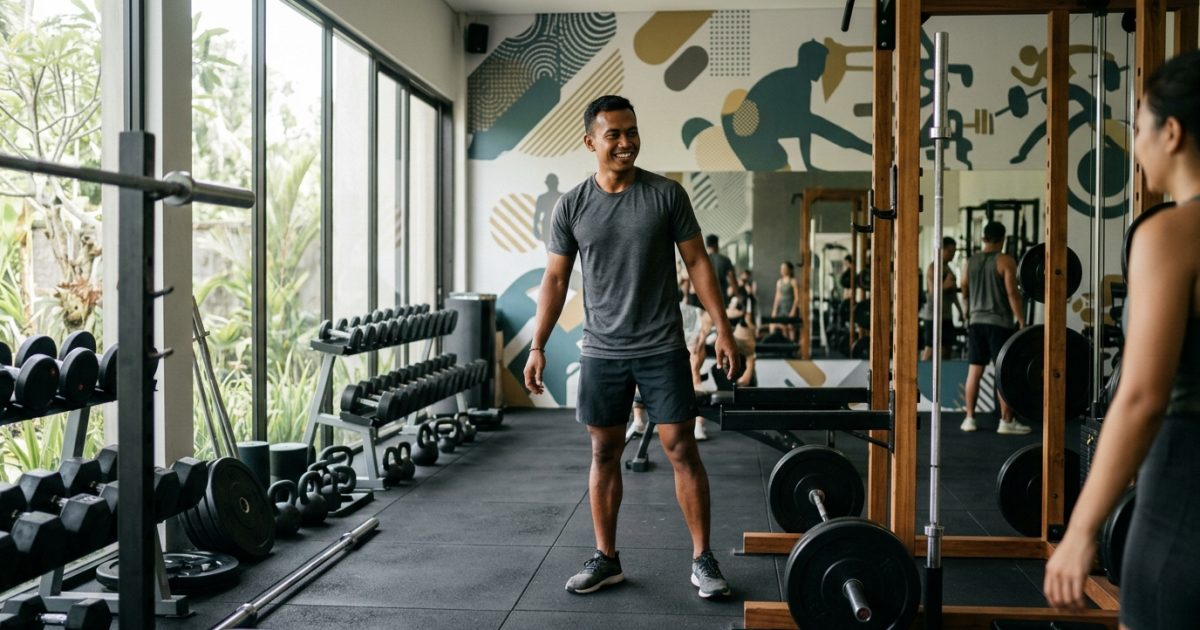
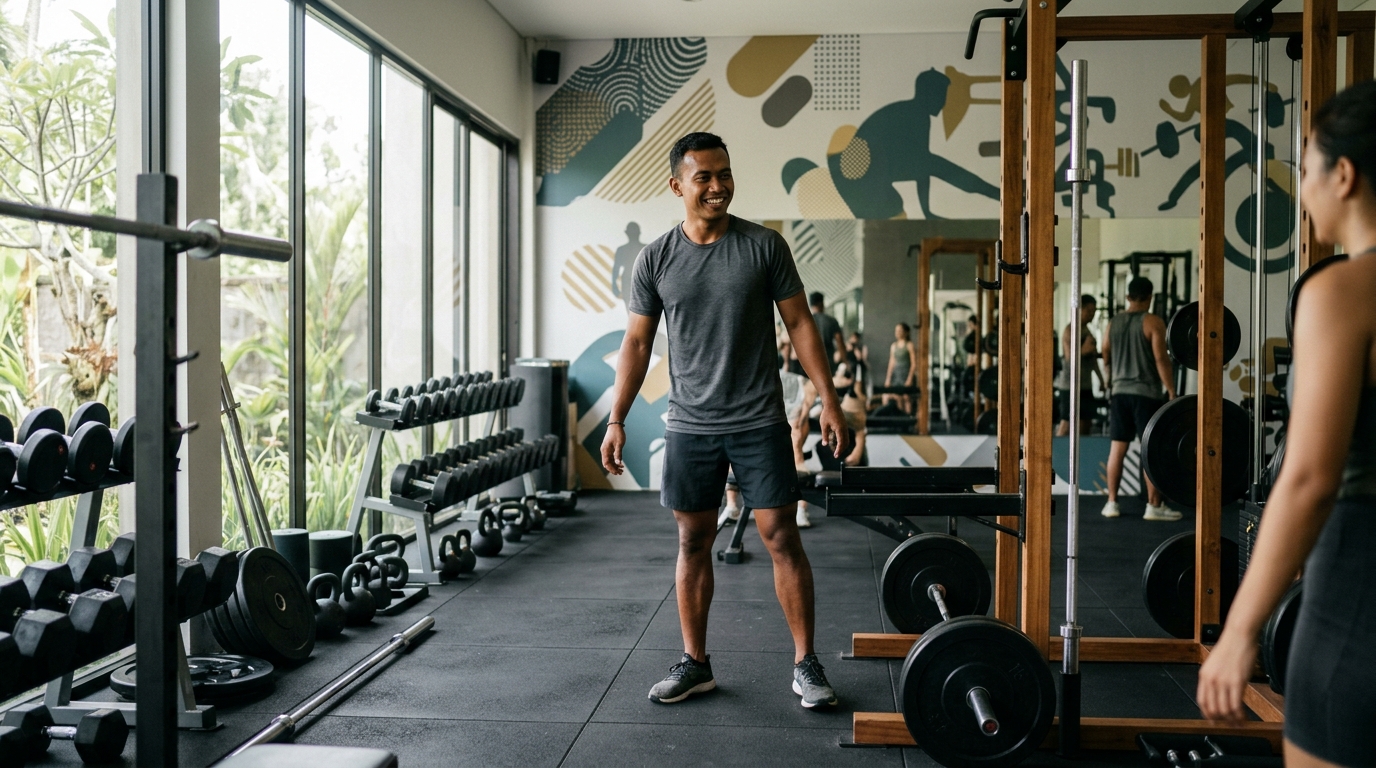
Quick price summary: Gyms in Bali (2026)
- Low end: IDR 25,000–80,000 per day pass / IDR 300,000–600,000 per month
- Mid-range: IDR 600,000–1,200,000 per month / USD 40–80 per month
- High end / enterprise: IDR 1,200,000–2,500,000+ per month / USD 80–165+ per month
Prices in IDR and USD. Last updated 2026.
Gym memberships in Bali cover everything from bare-bones local weight rooms to fully equipped international-standard facilities with pools, saunas, cold plunge recovery areas, cafes, and specialist coaching. The service itself is straightforward, but the price range is wide enough that two gyms sitting on the same street in Canggu can charge five times the difference for monthly membership. What you actually get for that difference matters enormously.
Costs vary based on location, facility size, equipment quality, included classes, and whether the gym is built for local residents or the expatriate and tourist market. A no-frills local gym in Kuta or Ubud operates on a completely different cost structure than a premium wellness club in Seminyak or a specialist strength facility in Pererenan. Understanding what drives those differences helps you avoid overpaying for amenities you do not need, or underpaying and ending up in a gym that cannot support your training goals.

What Do Gyms Cost in Bali?
Day passes at budget gyms in Bali start at around IDR 25,000 (roughly USD 1.50) at local-facing facilities, though most gyms popular with expats and tourists charge IDR 50,000–150,000 for a single visit. Monthly memberships at mid-range gyms in areas like Canggu, Seminyak, and Uluwatu sit between IDR 600,000 and IDR 1,200,000 (approximately USD 40–80). Premium facilities with recovery amenities, functional training zones, CrossFit programming, or personal training packages can run IDR 1,500,000–2,500,000 per month or higher.
For context, Avenue Fitness Canggu, Fitness Plus Canggu, and similar mid-tier gyms typically charge in the IDR 700,000–1,000,000 per month range. Specialist strength and conditioning gyms such as Nirvana Strength Canggu and Obsidian Gym position themselves at the higher end, with some monthly memberships reaching USD 80–100. Budget options like Bull Gym Canggu and several local gyms around Kuta and Ubud still offer access for IDR 300,000–500,000 per month, making Bali one of the more affordable places in Southeast Asia to maintain a consistent training routine.
Price Breakdown by Service Level
| Service Level | What You Get | Typical Price Range | Best For |
|---|---|---|---|
| Basic / Local | Free weights, basic machines, dumbbells, bench press, squat rack. No frills, limited air conditioning, small space. | IDR 25,000–50,000 day pass / IDR 300,000–500,000 per month | Budget-conscious locals and travellers staying long-term who need functional access without extras. |
| Standard / Mid-Range | Full cardio and resistance equipment, functional training area, free weights, clean facilities, some classes included. | IDR 50,000–100,000 day pass / IDR 600,000–1,000,000 per month | Expats and fitness enthusiasts wanting reliable equipment and a decent training environment. |
| Premium | Spacious layout, highly-specialised equipment, strength racks, sauna, recovery zones, cafe, personal trainers, group classes including Muay Thai. | IDR 100,000–200,000 day pass / IDR 1,000,000–1,800,000 per month | Serious athletes, bodybuilding-focused members, and those wanting a complete wellness and recovery setup. |
| High-End / Specialist | International-standard equipment, cold plunge, jacuzzi, pool access, spa, elite coaching, CrossFit programming, performance-driven environment, competition-level setup. | IDR 150,000–250,000 day pass / IDR 1,800,000–2,500,000+ per month (USD 80–165+) | Professional athletes, those training for international competitions, and members who want a full lifestyle wellness club. |

What Affects the Cost of Gyms in Bali?
Location within Bali
Canggu, Seminyak, and Pererenan command the highest gym prices on the island due to high expat density, tourist foot traffic, and elevated commercial rents. Gyms in Uluwatu and Kuta sit slightly lower on average, while gyms in Ubud and less-developed areas are cheaper still. A gym in Canggu charging IDR 1,000,000 per month may offer a comparable equipment range to one in Ubud charging IDR 500,000, simply because of what the local market will bear.
Equipment Quality and Variety
Gyms stocked with commercial-grade machines, a full range of dumbbells, multiple squat racks, cable systems, and specialist strength equipment cost more to run and charge accordingly. A gym with a single bench press station and a modest set of free weights cannot justify the same monthly rate as a facility featuring highly-specialised equipment across a large, well-maintained floor space.
Included Amenities and Recovery Facilities
The presence of a sauna, cold plunge, ice bath, jacuzzi, outdoor gym area, or pool adds meaningful value and cost. Gyms like Obsidian Gym and elite-tier wellness clubs build recovery into their membership proposition. If you need those features, the premium is often justified. If you just need access to weights and cardio machines, paying for amenities you will not use inflates your cost unnecessarily.
Classes and Personal Training
Many mid-range and premium gyms include group classes such as CrossFit, Muay Thai, and functional training in their membership fee. Others offer these as paid add-ons at IDR 100,000–200,000 per session. Gyms with accredited personal trainers on staff charge more for membership and additional fees for one-on-one coaching, typically IDR 200,000–500,000 per session on top of base membership.
Membership Duration and Pass Type
Day passes carry a significant per-day premium compared to monthly rates. A day pass at IDR 100,000 works out to IDR 3,000,000 per month if you train daily, while the same gym’s monthly membership might be IDR 900,000. Most gyms also offer weekly passes at IDR 200,000–400,000, which suits short-stay visitors better than committing to a full month. Some gyms discount further for three-month or six-month upfront commitments.
How to Get Accurate Quotes
- Identify your training area before contacting gyms. Canggu, Seminyak, Uluwatu, Kuta, and Ubud all have distinct gym scenes with different price norms. Narrow your area first so you are comparing like for like.
- Visit the gym in person before committing to any membership. Equipment lists on websites are often incomplete or outdated. A walkthrough tells you about gym size, air conditioning, cleanliness, and how busy it gets during your usual training hours.
- Ask explicitly what is included in the quoted price. Clarify whether classes, protein shakes, sauna, or recovery facilities are bundled or billed separately. Some gyms advertise a base price that excludes the amenities shown in their marketing photos.
- Request a day pass or trial week before signing up for a month or longer. Most reputable gyms in Bali offer this. It lets you assess the performance-driven environment, the quality of trainers, and whether the equipment layout works for your training style.
- Compare at least three gyms in your target area with equivalent equipment and facilities. Prices for comparable gyms in the same suburb can vary by 30–50%, and negotiating a lower monthly rate is often possible if you are committing for three months or more.
Red Flags to Watch Out For
- No clear price list displayed publicly. Gyms that refuse to quote prices until you are standing at the front desk may be applying tourist pricing on the spot. Reputable gyms publish their day pass and membership rates.
- Equipment that looks dated or poorly maintained on your inspection visit. Broken machines, worn cable systems, and rusty free weights suggest the gym is not reinvesting in its facilities, regardless of what it charges.
- Memberships sold without a written agreement. Any gym asking you to pay a month or more upfront with nothing in writing, particularly around cancellation terms and facility access, is a risk worth avoiding.
- Overcrowding during peak hours. A gym that looks spacious at 2pm may be unusable at 7am or 6pm. Ask about member capacity and check at peak time before signing up.
- No qualified trainers on floor during staffed hours. Premium-priced gyms that cannot point to credentialled coaching staff are charging for a premium experience they are not delivering.
- Misleading amenity listings. Some gyms in Canggu and Seminyak list sauna, pool, or cafe facilities that are shared with adjacent hotels or businesses and are not actually included in the gym membership fee. Confirm access explicitly.

Frequently Asked Questions
How much do gyms cost in Bali on average?
For a standard mid-range gym in a popular area like Canggu or Seminyak, expect to pay IDR 600,000–1,000,000 per month (approximately USD 40–65). Day passes at similar facilities run IDR 50,000–100,000. Budget gyms in local areas like Kuta and Ubud can be as low as IDR 25,000 per day or IDR 300,000–400,000 per month. Premium and specialist gyms with recovery amenities, elite coaching, and international-standard equipment range from IDR 1,200,000 to IDR 2,500,000 per month.
Why are some gyms prices so much cheaper?
Cheaper gyms typically serve a local Indonesian membership base, occupy lower-rent locations away from expat and tourist zones, and invest less in equipment variety, air conditioning, and ancillary facilities. A local gym in Kuta charging IDR 25,000 per day is perfectly functional for basic strength training and cardio. It simply cannot offer the same floor space, equipment range, recovery facilities, or class schedule as a facility like Nirvana Strength Canggu or Obsidian Gym, which carry significantly higher operating costs.
Is it worth paying more for gyms in Bali?
It depends entirely on what you need from your training. If you require a full range of strength equipment, qualified coaching, CrossFit or Muay Thai classes, sauna, cold plunge, and a cafe, then a premium gym at IDR 1,500,000–2,000,000 per month delivers genuine value, particularly compared to equivalent facilities in Australia or Europe. If your training is basic and consistent, a mid-range gym at IDR 600,000–900,000 per month covers everything you need without paying for amenities you will not use. The mistake most visitors make is defaulting to the cheapest option without checking equipment quality, or defaulting to the most expensive without confirming what is actually included.
Bali’s gym market in 2026 is mature enough to offer solid options across every budget, from IDR 25,000 day passes at local gyms to USD 165 monthly memberships at high-end wellness facilities. The most important step is matching the gym to your actual training requirements, visiting in person before committing, and confirming exactly what your membership includes. Spending IDR 100,000 on a day pass at two or three gyms before signing up for a month saves far more than it costs.
For a curated list of top-rated providers, see our guide: Best Gyms in Bali (2026).