Quick price summary: Cooking Classes in Bali (2026)
- Low end: IDR 350,000 – IDR 550,000 (approx. USD 22 – USD 34) per person
- Mid-range: IDR 600,000 – IDR 1,100,000 (approx. USD 37 – USD 68) per person
- High end / enterprise: IDR 1,200,000 – IDR 2,500,000+ (approx. USD 75 – USD 155+) per person
Prices in IDR and USD. Last updated 2026.
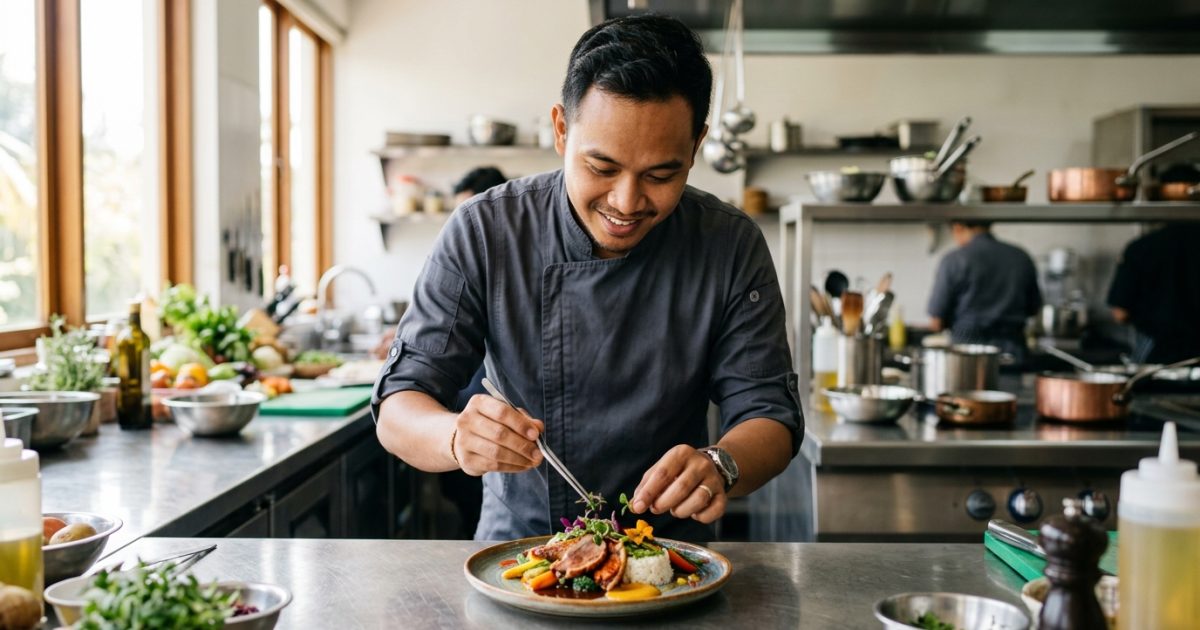
Cooking classes in Bali range from a two-hour market visit and cook-up in a family compound to a full-day farm-to-table experience led by a professional Balinese chef. Most classes teach you to prepare five to eight dishes from Balinese cuisine, covering staples like satay, lawar, and black rice pudding. Some include a morning trip to a traditional market, a guided tour of a spice garden, or optional cycling and trekking add-ons. The class typically wraps up with a communal meal of everything you cooked.
Prices vary because the inclusions, group size, location, and instructor experience differ considerably from one provider to the next. A shared group class in Ubud with a market visit costs a fraction of a private afternoon class on an organic farm in the Jatiluwih rice terraces with a dedicated chef and full dietary accommodation. Understanding what each price tier actually delivers will help you choose a class that fits your budget and the kind of experience you want.

What Do Cooking Classes Cost in Bali?
The most commonly booked cooking classes in Bali sit in the IDR 500,000 to IDR 900,000 range per person (roughly USD 31 to USD 56). At this price you typically get a morning class with a traditional market visit, hands-on cooking of five to seven dishes, all ingredients included, and a shared meal at the end. Group sizes generally run from four to twelve participants. Ubud is the main hub for these classes, though strong options exist in Canggu, Seminyak, Sanur, and Sidemen.
Budget options start around IDR 350,000 to IDR 500,000 (USD 22 to USD 31) per person and are usually shared group classes without a market component. At the premium end, private cooking classes in Ubud or on organic farms around Penebel and Karangasem can reach IDR 1,500,000 to IDR 2,500,000 (USD 94 to USD 155) per person, particularly when they include advanced techniques, a farm tour, trekking, or a full evening dinner format. Private classes for two to four people tend to cost 40 to 80 percent more per person than a standard shared group booking.
Price Breakdown by Service Level
| Service Level | What You Get | Typical Price Range | Best For |
|---|---|---|---|
| Basic | Shared group class (up to 12 people), 2–3 hours, 4–5 dishes, no market visit, recipes to take home | IDR 350,000 – IDR 550,000 (USD 22 – USD 34) per person | Solo travellers and backpackers on a tight budget |
| Standard | Group class (6–10 people), morning traditional market visit, 5–7 Balinese dishes, 3–4 hours, communal meal, vegan and vegetarian options available | IDR 600,000 – IDR 900,000 (USD 37 – USD 56) per person | Couples, families, and small tour groups wanting a cultural experience |
| Premium | Small group or semi-private class (2–6 people), farm or village setting, organic ingredients, trekking or cycling add-on, advanced techniques, 4–6 hours, full meal with drinks | IDR 950,000 – IDR 1,500,000 (USD 59 – USD 94) per person | Food enthusiasts, honeymooners, and travellers who want an intimate hands-on experience |
| Private / Custom | Fully private class for 1–4 people, personalised menu, dedicated chef, market visit, dietary restrictions fully accommodated, 4–7 hours, evening dinner option, hotel transfers sometimes included | IDR 1,500,000 – IDR 2,500,000+ (USD 94 – USD 155+) per person | Corporate groups, special occasions, and travellers with specific dietary or culinary requirements |

What Affects the Cost of Cooking Classes in Bali?
Location within Bali
Ubud commands the highest prices for cooking classes because of its reputation as Bali’s cultural centre and the concentration of established cooking schools there. Classes in Canggu and Seminyak tend to run slightly lower in price and attract a more casual crowd. Village-based classes in areas like Sidemen, Penebel, or Lovina are often cheaper still, though transport to reach them adds time and sometimes cost.
Group size and class format
Shared group classes spread the cost of the instructor, kitchen space, and ingredients across eight to twelve people, keeping per-person prices low. Private cooking classes, or those capped at two to four participants, cost significantly more per person because you are effectively covering most of the fixed costs yourself. The trade-off is a more personalised experience where the chef can adjust the menu and pace to suit your skill level.
Inclusions and duration
A class that includes a guided walk through a traditional morning market, a spice garden tour, a farm visit, or a trekking and cycling component will cost more than a straightforward cook-and-eat session. Classes running four to seven hours with a full dinner are priced higher than two-to-three-hour morning classes. Look closely at what is included before comparing prices, as two classes listed at similar rates can differ greatly in what you actually receive.
Dietary accommodation
Most reputable Bali cooking class providers can accommodate vegetarian and vegan diets at no extra charge when you notify them in advance. Classes that specifically cater to other dietary restrictions, such as gluten-free or allergy-specific menus, may charge a small premium for sourcing alternative ingredients. Last-minute dietary requests on the day of the class are harder to accommodate and may not always be possible.
Instructor experience and school reputation
Long-established cooking schools in Ubud with well-known instructors, published recipes, and strong reviews on booking platforms charge a premium reflecting their track record. Newer or smaller operators offer lower prices to attract bookings but are not necessarily worse in quality. Checking verified reviews from recent participants gives you a clearer picture than price alone.
How to Get Accurate Quotes
- Decide on your group size and preferred format before you start comparing. Knowing whether you want a shared group class or a private experience immediately narrows the field and makes price comparisons meaningful.
- List your dietary requirements and skill level upfront. Contact providers directly via email or their booking form and ask whether they can accommodate your needs, and whether there is an additional cost to do so. This avoids surprises on the day.
- Compare what is actually included in the price. Ask each provider whether the market visit, transport, ingredients, recipes, and the final meal are all covered, or whether any of these are charged separately.
- Book at least three to five days in advance for standard group classes, and one to two weeks ahead for private or custom classes, particularly in peak season (July, August, and December). Last-minute bookings sometimes attract a higher rate or reduced availability.
- Confirm the cancellation policy in writing before paying. Reputable operators will provide clear terms around refunds, rescheduling, and what happens if minimum group numbers are not met.
Red Flags to Watch Out For
- No clear cancellation or refund policy listed. Legitimate cooking schools always provide written terms, and the absence of these is a warning sign.
- Prices well below IDR 300,000 per person for a class that claims to include a market visit, multiple dishes, and a meal. At that price point, corners are almost certainly being cut on ingredients, hygiene, or instructor time.
- Vague descriptions that do not specify group size, number of dishes, duration, or whether the market visit is guided or self-directed. These details matter and a good operator will state them clearly.
- No mention of dietary options anywhere on the listing or website. Any reputable class should acknowledge that vegan, vegetarian, and other dietary requests are possible, even if they require advance notice.
- Pressure to pay in full with cash before arrival and no digital receipt or booking confirmation. Always get a written confirmation with the date, time, location, and inclusions clearly stated.
- Reviews that are generic, undated, or only available on the operator’s own website. Look for verified reviews on independent platforms to confirm the experience matches what is advertised.

Frequently Asked Questions
How much do cooking classes cost in Bali on average?
The average price for a standard shared group cooking class in Bali in 2026 is around IDR 650,000 to IDR 800,000 per person (approximately USD 40 to USD 50). This typically covers a morning traditional market visit, five to seven Balinese dishes, all ingredients, and a communal meal. Private classes average IDR 1,500,000 to IDR 2,000,000 per person depending on duration and inclusions.
Why are some cooking classes prices so much cheaper?
Budget classes priced at IDR 350,000 or below usually cut costs by skipping the market visit, reducing the number of dishes, using a larger group format with less individual attention, or operating from a basic home kitchen rather than a purpose-built cooking school. These classes can still be enjoyable, but the experience is less immersive and the instruction less personalised. Some very cheap listings also omit the cost of transport to the venue, which can add IDR 100,000 to IDR 200,000 per person on top of the advertised price.
Is it worth paying more for cooking classes in Bali?
For travellers who want to learn genuine Balinese cooking techniques and understand the culture behind the food, paying IDR 800,000 to IDR 1,200,000 for a class with a market visit, a small group, and an experienced local chef is generally worth the difference. The morning market component alone adds real context to the ingredients and cooking methods. Private classes are worth the extra cost if you have specific dietary requirements, a special occasion to mark, or if you want a personalised menu and one-on-one time with a chef rather than a group setting.
Bali’s cooking class market covers a wide enough range of formats, prices, and locations that most travellers can find a good fit. The key is matching the class format to what you actually want to get out of it, whether that is a quick introduction to Balinese cuisine on a budget, an all-day farm and village experience, or a private class with a dedicated chef who can work around your dietary needs and skill level. Booking through a reputable platform or directly with a well-reviewed school, confirming all inclusions in writing, and giving advance notice of any dietary requirements will set you up for a straightforward and enjoyable experience.
For a curated list of top-rated providers, see our guide: Best Cooking Classes in Bali (2026).