Quick price summary: Cooking Classes in Bali (2026)
- Low end: IDR 150,000 – IDR 350,000 (approx. USD 9 – USD 22) per person
- Mid-range: IDR 350,000 – IDR 750,000 (approx. USD 22 – USD 47) per person
- High end / enterprise: IDR 750,000 – IDR 2,500,000+ (approx. USD 47 – USD 155+) per person
Prices in IDR and USD. Last updated 2026.
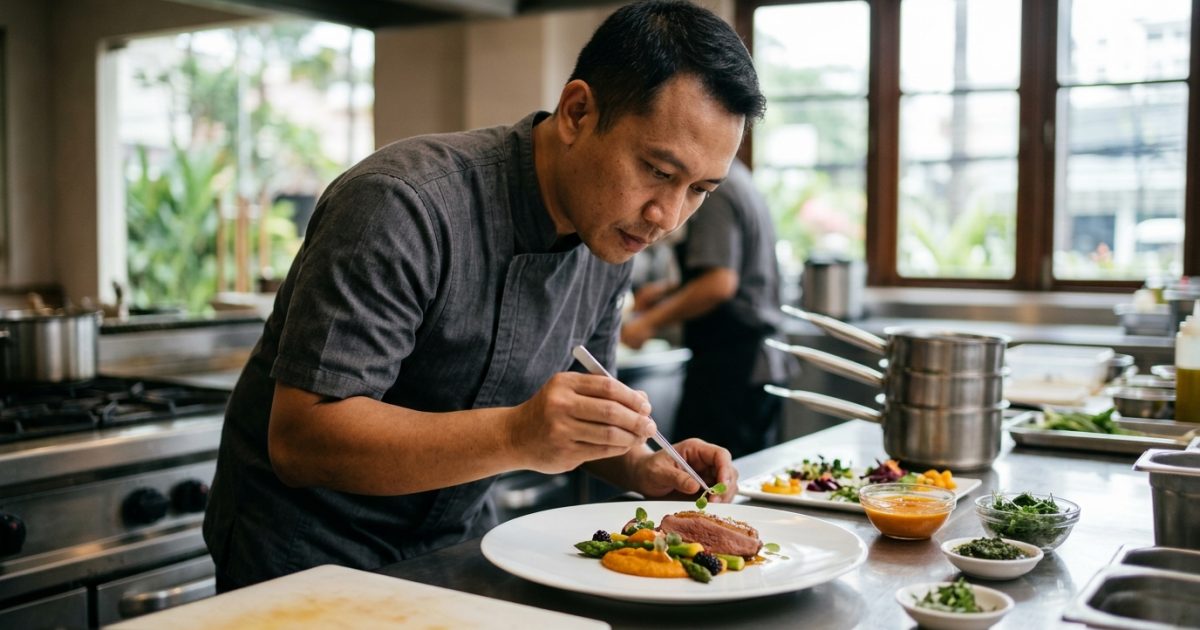
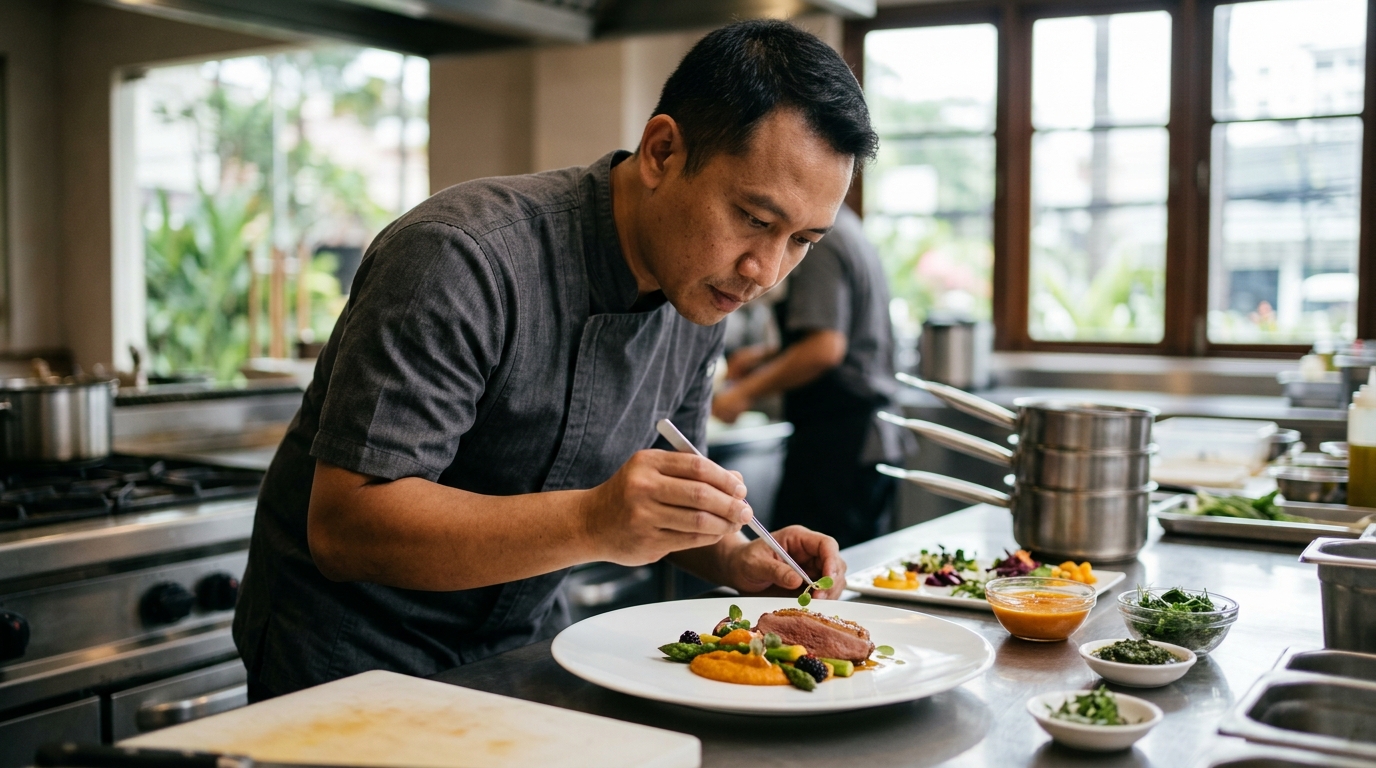
Balinese cooking classes range from a quick two-hour morning session at a local family compound to a full-day experience that takes you through a village market, a working organic farm, and multiple cooking stations before sitting down to eat what you have made. The format you choose, and where you take it, shapes the cost significantly. A class in Ubud will typically price differently from one in Seminyak or Canggu, and a private session will cost considerably more than joining a shared group.
Prices vary because no two classes are structured the same way. Factors such as group size, the inclusion of a market visit or farm tour, whether the menu covers traditional Balinese dishes or extends to vegan and vegetarian options, the time of day, and the credentials of the instructor all feed into what you pay. Understanding these variables helps you match your budget to an experience that delivers genuine value rather than a watered-down afternoon class with a printed recipe card.

What Do Cooking Classes Cost in Bali?
The most common price point for a group Balinese cooking class sits between IDR 350,000 and IDR 600,000 (roughly USD 22 to USD 37) per person. At this level, you typically get a three to four hour morning class, a guided market visit to source ingredients, hands-on cooking of four to seven dishes, and a meal at the end. Classes operating in Ubud, Sidemen, and the Jatiluwih area often include a farm component, which adds time and educational depth without always adding cost — some of the most well-regarded farm-to-table sessions in Ubud sit comfortably within this mid-range band.
Budget classes start around IDR 150,000 to IDR 300,000 (USD 9 to USD 19). These tend to run for two hours, involve a smaller number of dishes, and skip the market or farm visit entirely. At the other end, private classes, evening dinner experiences, or full-day culinary programs in premium locations like Nusa Dua or boutique resorts in Ubud can reach IDR 1,500,000 to IDR 2,500,000 (USD 94 to USD 155) per person. Corporate or group bookings with custom menus and private instruction fall into a similar range or higher.
Price Breakdown by Service Level
| Service Level | What You Get | Typical Price Range | Best For |
|---|---|---|---|
| Basic | 2-hour group class, 3–4 dishes, no market or farm visit, recipe card included | IDR 150,000 – IDR 300,000 (USD 9 – USD 19) per person | Budget travellers, short itineraries, first-time cooking class participants |
| Standard | 3–4 hour morning class, guided market visit, 5–7 traditional Balinese dishes, shared dining, vegan and vegetarian options available | IDR 350,000 – IDR 600,000 (USD 22 – USD 37) per person | Most travellers wanting an authentic, hands-on experience at fair value |
| Premium | Full-day class (5–7 hours), organic farm visit or rice terrace trek, 7+ dishes, smaller group or semi-private, afternoon or evening dinner format | IDR 650,000 – IDR 1,200,000 (USD 40 – USD 75) per person | Food enthusiasts, couples, travellers wanting a more intimate and immersive experience |
| Private or Custom | Private instruction, customised menu including advanced techniques, dietary accommodations, full-day or multi-session format, hotel pickup often included | IDR 1,200,000 – IDR 2,500,000+ (USD 75 – USD 155+) per person | Couples, small families, corporate groups, participants with specific dietary requirements or culinary goals |

What Affects the Cost of Cooking Classes in Bali?
Location
Ubud is the centre of Bali’s cooking class scene and hosts the widest range of options, from budget village classes to high-end farm experiences. Classes in Seminyak and Canggu tend to carry a slight premium due to the cost of operating in tourist-dense areas. More remote locations like Sidemen, Lovina, or Penebel often charge less despite offering equally authentic experiences, partly because visitor numbers are lower and overhead costs are smaller.
Group size and class format
Shared group classes with eight to sixteen participants cost less per person because the instructor’s time and the ingredient cost are split across the group. Smaller classes of two to six people, and fully private sessions, provide personalised instruction and a more flexible pace, but that comes at a higher per-person price. If you are travelling with four or more people, booking a private class can sometimes work out to a similar per-person cost as joining a premium group session.
Inclusions and duration
A market visit to a local morning market adds one to two hours and genuine cultural context to a class. A farm component, particularly at organic or working farms around Ubud, Jatiluwih, or Karangasem, adds further time and often justifies a higher price. Classes that include hotel transfers, a full dinner rather than a lunch tasting, or additional cultural activities such as a village tour will cost more than a stripped-back class with no extras.
Menu complexity and dietary accommodation
Classes covering a larger number of dishes, more technically involved recipes, or cuisine styles beyond standard Balinese cooking (such as vegan Balinese food, Jamu preparation, or advanced spice blending) tend to sit at the higher end of their respective price bands. Classes that reliably accommodate dietary restrictions, including vegan, vegetarian, gluten-free, and other dietary requirements, often invest more in ingredient sourcing and instructor training, which is reflected in the price.
Time of day
Morning classes are the most common format and generally the most affordable. The morning timing works well for market visits, when produce is freshest and markets are most active. Afternoon and evening classes, particularly those that culminate in a dinner experience, tend to cost more and cater to a slightly different audience, often couples or small groups looking for a relaxed, social cooking evening rather than an educational morning activity.
How to Get Accurate Quotes
- Decide on your format before you enquire. Know whether you want a morning or evening class, a group or private session, and whether a market visit or farm component matters to you. This allows providers to give you a relevant price rather than a generic one.
- Ask what is included in the quoted price. Confirm whether the cost covers a market visit, all ingredients, the meal at the end, transfers, and recipe cards. Some operators advertise a low base price and charge separately for each add-on.
- Specify your dietary requirements upfront. Operators who can genuinely accommodate vegan, vegetarian, or other dietary restrictions will say so clearly. Ask whether the menu changes or whether you simply omit certain steps, as this affects the quality of your experience.
- Check the group size cap. For a class described as “intimate” or “small group”, ask the actual maximum number of participants. A class that caps at eight people is meaningfully different from one that accepts sixteen.
- Compare at least three providers in your target area, whether Ubud, Canggu, Sanur, or elsewhere, before booking. Prices for comparable classes can vary by IDR 150,000 or more between providers, and reading recent reviews will tell you whether the experience matches what is advertised.
Red Flags to Watch Out For
- No clear cap on participant numbers. A provider who cannot or will not tell you the maximum class size may be running overcrowded sessions where individual instruction is minimal.
- Prices significantly below IDR 150,000 per person for a full class with a market visit. At that price point, corners are almost certainly being cut on ingredient quality, instruction time, or the number of dishes you actually cook.
- Vague dietary accommodation. A provider who says “yes” to every restriction without any follow-up questions may not have genuinely adjusted the menu. Ask specifically what dishes will be prepared and how they are modified.
- No physical location or class venue listed. Some operators book you into a class first and assign a venue later. This limits your ability to research the setting and increases the risk of a last-minute switch.
- Recipes that are printed rather than taught. If the class involves following a laminated card with minimal instructor involvement, it is closer to a demonstration than a hands-on cooking experience.
- Payment in full required upfront with no cancellation terms. Legitimate operators will have a clear cancellation policy. Requiring full non-refundable payment at the time of booking, particularly for premium or private classes, is a concern.

Frequently Asked Questions
How much do cooking classes cost in Bali on average?
The average price for a standard group cooking class in Bali in 2026 sits around IDR 400,000 to IDR 550,000 (USD 25 to USD 34) per person. This typically covers a three to four hour morning session, a guided market visit, and hands-on cooking of five to seven dishes, finishing with a shared meal. Private classes and full-day experiences with farm visits cost considerably more, often between IDR 1,000,000 and IDR 2,000,000 (USD 62 to USD 125) per person.
Why are some cooking classes prices so much cheaper?
Budget classes in the IDR 150,000 to IDR 300,000 range achieve their lower price by shortening the session, reducing the number of dishes, removing the market or farm visit, and running larger groups. Some also operate out of modest settings with basic equipment. This does not necessarily make them poor value, but it does mean the experience is less immersive and instruction is less personalised. Classes priced below IDR 150,000 should be approached with caution, as ingredient quality and cooking time are often compromised to that degree.
Is it worth paying more for cooking classes in Bali?
For most travellers, yes, stepping up from a basic class to a standard or premium one is worth the extra spend. The difference between a IDR 200,000 class and a IDR 500,000 class is often the market visit, the number of dishes, the group size, and the depth of instruction. If you have a genuine interest in Balinese food, cooking techniques, or want to come away with skills and recipes you will actually use, the mid-range and premium options deliver measurably more. Private classes are worth considering for couples or small groups who want a flexible, personalised session rather than a group tour format.
Cooking classes in Bali cover a wide spectrum, from a quick two-hour introduction in Kuta to a full-day journey through an Ubud morning market, an organic farm in the hills, and a seven-course cooking session with a local chef. Getting the price right means being clear about what you want from the experience before you book, comparing providers on inclusions rather than headline price alone, and asking the right questions about group size, dietary accommodation, and what actually happens during those hours in the kitchen.
For a curated list of top-rated providers, see our guide: Best Cooking Classes in Bali (2026).