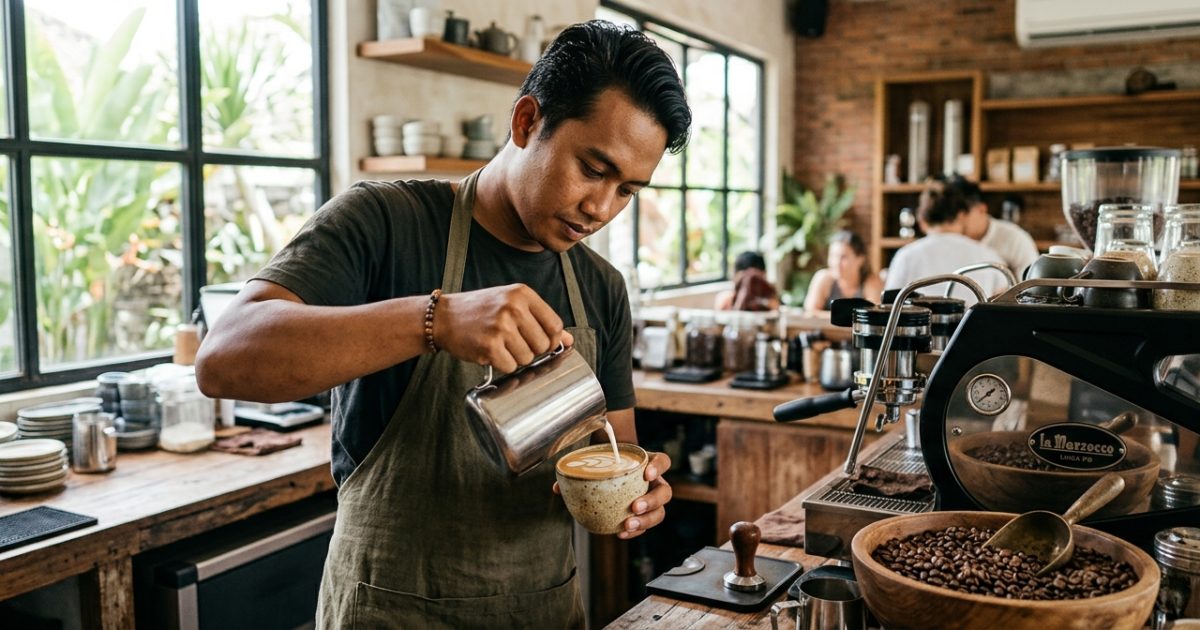
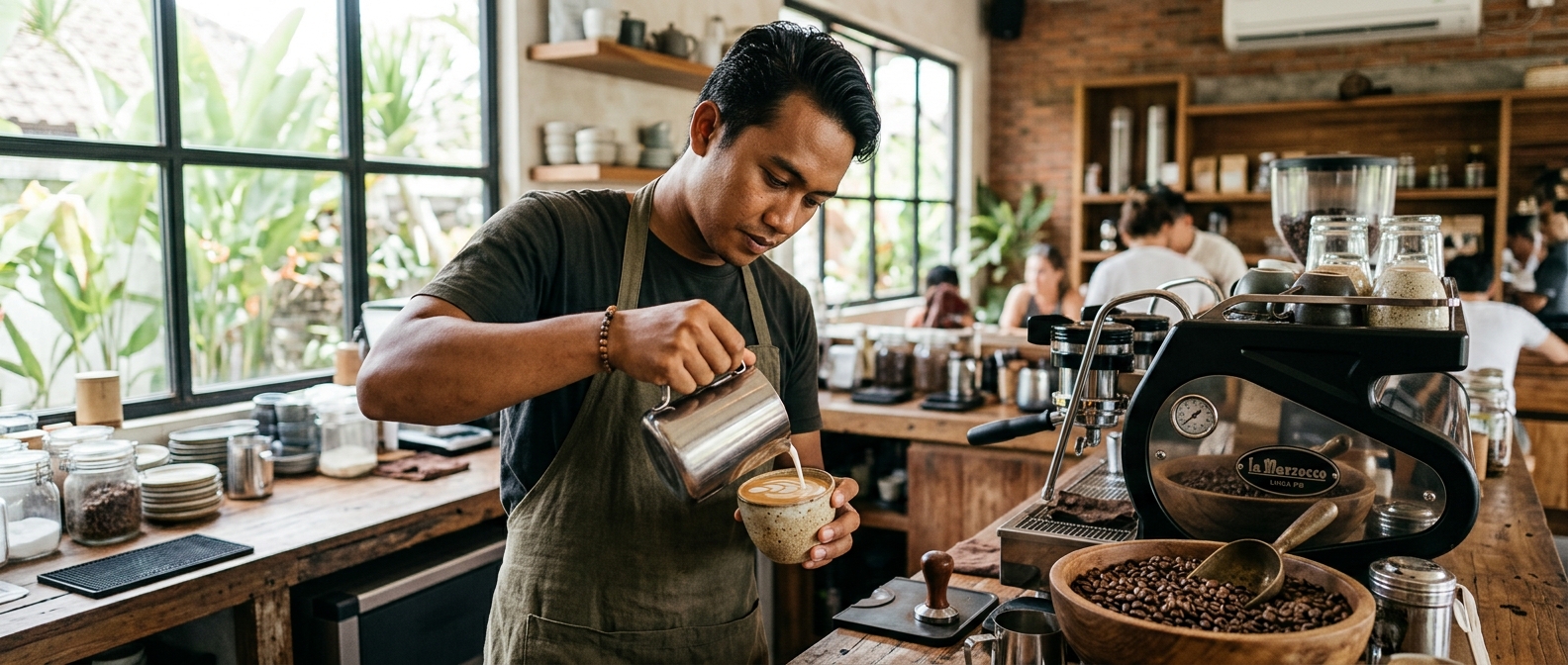
Quick price summary: Cafes in Bali (2026)
- Low end: IDR 15,000 – IDR 50,000 per item (local warungs and street food stalls)
- Mid-range: IDR 50,000 – IDR 150,000 per item (cafe scene in Canggu, Ubud, Seminyak)
- High end / enterprise: IDR 150,000 – IDR 400,000+ per item (premium and fine dining cafes)
Prices in Indonesian Rupiah (IDR). Last updated 2026.
Bali’s cafe culture spans everything from a plastic-stool warung serving nasi goreng for IDR 20,000 to a polished Canggu brunch spot charging IDR 180,000 for an acai bowl with rice field views. The island has attracted digital nomads, expats, and travellers in large enough numbers that its cafe scene now rivals major cities in diversity and quality, without matching them in price. Whether you are planning a working holiday, a luxury escape, or a budget backpacking trip, understanding what you will actually spend across different dining levels saves you both money and disappointment.
Costs vary considerably depending on location, cuisine type, ambience, and who the cafe is designed to serve. A cafe in Seminyak targeting well-heeled tourists will price its flat whites and Mediterranean-inspired breakfasts at two to three times what you would pay at a comparable spot in Ubud’s quieter streets. Wi-Fi quality, seating comfort, and the type of coffee on offer all factor into pricing, particularly in areas popular with digital nomads who treat cafes as informal offices for the day.
What Do Cafes Cost in Bali?
At the budget end, local warungs and street food stalls across Bali serve full meals, including nasi campur, mie goreng, and fresh juice, for IDR 15,000 to IDR 50,000. These are the spots frequented by locals and budget travellers alike, and they represent some of the best value eating on the island. Casual cafes and casual restaurants a step up from warungs, the kind found across Canggu and Ubud, typically charge IDR 40,000 to IDR 90,000 for coffee and IDR 60,000 to IDR 150,000 for breakfast or lunch plates like smoothie bowls, avocado toast, pancakes, and Indonesian staples.
Mid-range cafes in areas like Seminyak and central Canggu sit between IDR 80,000 and IDR 200,000 per person for a full breakfast or brunch with coffee. Premium cafes, fine dining spaces, and luxury restaurant experiences push past IDR 200,000 per person, with some Seminyak fine dining restaurants reaching IDR 500,000 to IDR 1,000,000 per person for a full dinner with drinks. A practical daily food budget for someone eating at mid-range cafes across breakfast, lunch, and a light dinner runs to approximately IDR 300,000 to IDR 600,000 per day.
Price Breakdown by Service Level
| Service Level | What You Get | Typical Price Range | Best For |
|---|---|---|---|
| Local Warungs and Street Food | Nasi goreng, nasi campur, mie goreng, fresh juice, hot tea or coffee. Basic seating, authentic Balinese flavours, no frills. | IDR 15,000 – IDR 50,000 per meal | Budget travellers, locals, anyone wanting genuine Indonesian cuisine at low cost |
| Casual Cafes and Brunch Spots | Good coffee, smoothie bowls, acai bowls, pancakes, vegan options, reliable Wi-Fi, comfortable seating. Common across Canggu and Ubud. | IDR 50,000 – IDR 150,000 per item; IDR 150,000 – IDR 300,000 per person for a full sitting | Digital nomads, expats, travellers wanting a comfortable work-friendly space with quality food |
| Mid-Range Cafes and Restaurants | Curated menus featuring Balinese cuisine alongside western and Mediterranean-inspired breakfasts, breezy tropical furnishings, rice field or beach views, quality espresso. | IDR 150,000 – IDR 350,000 per person | Couples, food-focused tourists, those wanting a premium casual dining experience in Seminyak or Canggu |
| Premium and Fine Dining | Full-service dining rooms, extensive wine and cocktail lists, chef-driven menus, luxury seating, exceptional views. Found across Seminyak’s restaurant strip and select Ubud properties. | IDR 350,000 – IDR 1,000,000+ per person | Luxury travellers, special occasion dining, those wanting the best Bali’s culinary scene offers |
What Affects the Cost of Cafes in Bali?
Location Within Bali
Canggu, Seminyak, and Kerobokan carry the highest prices due to demand from tourists, expats, and digital nomads. Ubud sits slightly lower for comparable quality. Areas away from these popular parts of the island, such as Amed, Lovina, or the Bukit Peninsula’s quieter streets, offer noticeably cheaper cafe prices even for similar menu items. A flat white in Canggu averages IDR 45,000 to IDR 60,000; the same drink in a local Ubud spot can cost IDR 30,000 to IDR 45,000.
Type of Cuisine and Menu Complexity
Cafes serving Indonesian staples like nasi and mie dishes price far lower than those offering imported ingredients. Acai bowls, avocado-based dishes, wholesome Mediterranean-inspired breakfasts, and specialty espresso drinks carry higher costs partly because many ingredients are imported. A warung serving rice dishes will always undercut a cafe built around superfood bowls and cold brew coffee, regardless of neighbourhood.
Ambience, Seating, and Wi-Fi Quality
Cafes that invest in comfortable furnishings, fast and reliable Wi-Fi, air conditioning, and well-designed spaces charge a premium to cover those operating costs. Digital nomads specifically seek out these spaces, and cafes in Canggu in particular charge for the convenience of a full working-day setup. Some cafes charge a minimum spend of IDR 50,000 to IDR 100,000 to secure a table for the morning.
Time of Day and Meal Type
Breakfast and brunch menus in Bali’s popular cafes are typically priced 20 to 40 per cent lower than dinner at the same venue. Early morning coffee and a light plate at a cafe like Crate Cafe in Canggu costs far less than returning for an evening meal. Street food stalls also shift pricing slightly between morning and late-night trading as different produce and preparation comes into play.
Tourist Versus Local Pricing
Some warungs and street food vendors operate informal dual pricing where tourists pay more than locals. This is common in high-traffic areas near popular beaches and markets. Asking locals where they eat, or walking one or two streets back from main tourist strips, generally cuts food costs by 30 to 50 per cent without sacrificing quality or flavour.
How to Get Accurate Quotes
- Check menus online before visiting. Most well-regarded Bali cafes in Canggu, Ubud, and Seminyak publish their menus on Instagram or their own websites. Reviewing pricing before you arrive avoids surprises, particularly for larger group bookings or set brunch menus.
- Ask about minimum spend policies. Cafes popular with digital nomads frequently require a minimum spend per seat, especially during busy morning periods. Confirm this before settling in for a long work session.
- Compare prices across the same neighbourhood. Spending ten minutes walking a street in Canggu or Ubud reveals significant variation in pricing for nearly identical dishes. Two cafes on the same block can price an acai bowl IDR 40,000 apart.
- Check whether service charges and tax are included. Many mid-range and premium cafes in Bali add a 10 per cent government tax and a 5 to 10 per cent service charge on top of menu prices. A IDR 120,000 dish becomes IDR 138,000 to IDR 144,000 after charges.
- Use local recommendations from expat or nomad communities. Facebook groups, Reddit threads, and local nomad Slack communities for Bali regularly share current pricing and value picks across every area of the island.
Red Flags to Watch Out For
- No printed or posted menu with prices. Venues that quote prices verbally without showing a menu list are more likely to inflate costs for tourists. Always ask to see a physical or digital menu before ordering.
- Unclear tax and service charge disclosures. If a cafe does not state whether prices are inclusive or exclusive of tax and service, ask before ordering. A meal that looks affordable can cost 20 per cent more at the bill.
- Cafes with no visible reviews or social presence in high-traffic tourist areas. Legitimate, quality cafes in Canggu and Seminyak almost always have a findable online presence. A completely invisible cafe in a high-rent location may be cutting corners on food quality or hygiene.
- Aggressive street touts directing you to a specific cafe. Street-facing promoters who approach tourists generally earn a commission that gets folded into your prices. Cafes worth visiting rarely rely on this approach.
- Inconsistent Wi-Fi claims. Cafes that advertise fast Wi-Fi to attract digital nomads but cannot confirm their speed should be visited before you commit to a full day’s work. Arriving with a speed test app is practical if reliable connection is necessary for your work.
- Pre-set tourist menus with no itemised breakdown. Some tourist-area restaurants offer “set experiences” at fixed prices without clearly listing what is included. Confirm exactly what you receive before agreeing to any fixed-price arrangement.
Frequently Asked Questions
How much do cafes cost in Bali on average?
A typical sit-down cafe experience in Bali, covering a coffee and a meal at a casual brunch spot in Canggu or Ubud, costs between IDR 100,000 and IDR 250,000 per person. Street food and warung meals drop this to IDR 20,000 to IDR 60,000. Premium cafes and fine dining restaurants push the per-person cost to IDR 300,000 and above, with some Seminyak venues reaching IDR 700,000 to IDR 1,000,000 per person for dinner with drinks.
Why are some cafes prices so much cheaper?
Cheaper cafes and warungs use locally sourced Indonesian ingredients, operate with lower rent in residential or non-tourist areas, and carry minimal overhead on furnishings and staffing. They also serve a local customer base that simply cannot absorb tourist-level pricing. The food quality at many warungs is excellent because the recipes are straightforward, fresh, and cooked to order. Price difference does not always reflect a difference in food quality, particularly for traditional Balinese cuisine.
Is it worth paying more for cafes in Bali?
It depends on what you are paying for. A premium cafe with rice field views, reliable high-speed Wi-Fi, good espresso, and a comfortable space to work from or share a long brunch with friends delivers clear value for many visitors. Paying significantly more simply because a venue is located on a well-known street in Seminyak, without a corresponding lift in food quality or experience, is rarely worth it. The best approach is to mix spending across levels: eat street food and warung meals regularly, and reserve mid-range or premium cafes for occasions where the setting and menu genuinely justify the cost.
Bali’s cafe scene in 2026 offers genuinely good value across every spending level, from IDR 20,000 nasi goreng at a roadside warung to IDR 180,000 acai bowls overlooking rice fields in Ubud. Knowing the pricing landscape across Canggu, Seminyak, and beyond means you can plan your food budget with confidence, spend where the experience adds real value, and find excellent coffee and food without paying more than the market warrants.
For a curated list of top-rated providers, see our guide: Best Cafes in Bali (2026).